

Role
Customs
What happens when a tariff code turns out to be doubtful at clearance? The goods wait, the costs rise, and the classification decision has to be made now - although its effects stretch years back and years forward.
Intro call
Four questions we would start with
What happens when goods appear that you have not imported before?
Classification takes time, and in that time the goods generate storage costs. A decision made under that pressure is sometimes the one an inspection later corrects.
How many people touch one declaration before it goes to clearance?
Purchasing, logistics, customs, sometimes an agency. Every handover is a place where a document can be incomplete - and a missing paper holds up the whole delivery.
Who notices first that the same goods were declared under two different codes?
Usually the inspection, not you. And an inconsistency in classifying the same goods is one of the first questions asked at a verification.
When is the decision to use preferential origin made?
If it is at clearance, it is usually too late to gather the documents. An unused preference is duty to be recovered - through an application to amend the declaration, for which the time is counted in years. It is lost only when nobody files that application.
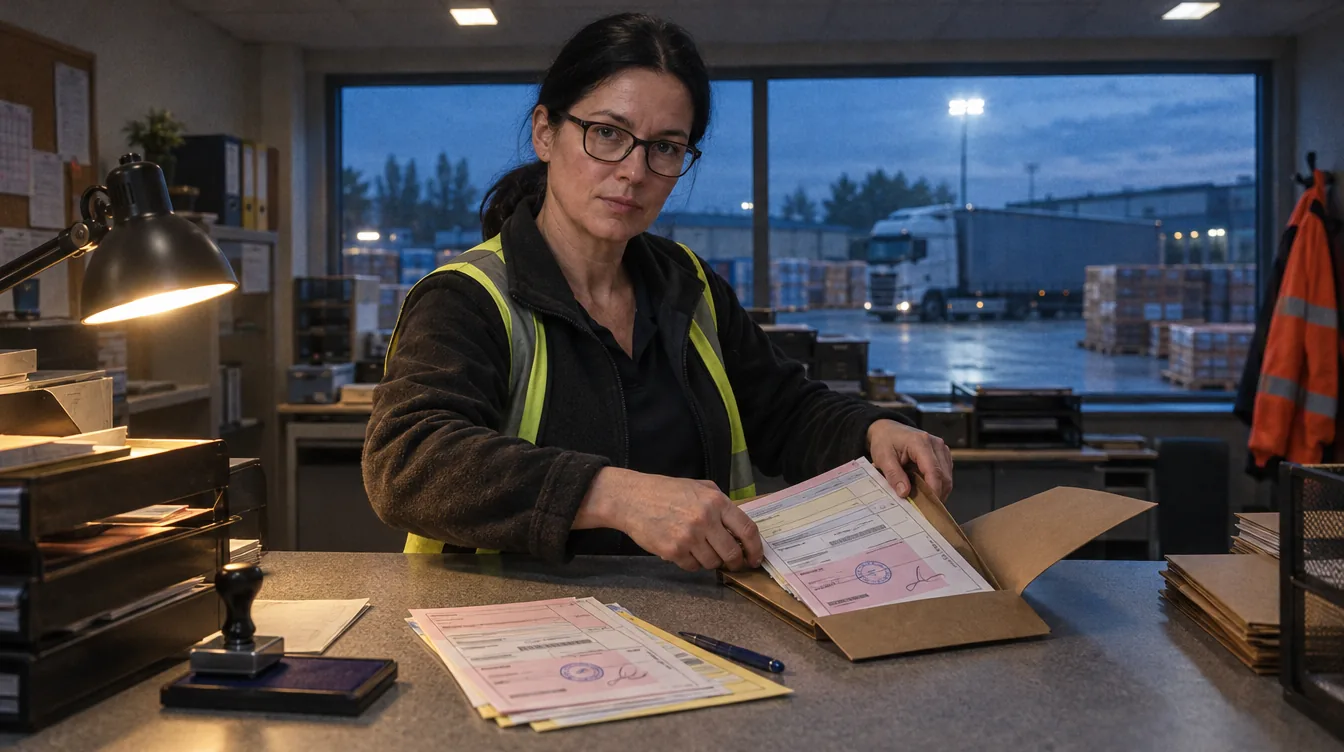
We take over the assembling, you keep the classification
Gathering documents, checking completeness, watching deadlines and finding earlier classifications can be taken off the desk. The decision on the tariff code and on the procedure stays with a person.
- A tariff code is a decision with accountability. - The system shows how you classified similar goods before and with what reasoning. The specialist chooses, with an application for binding tariff information where there is doubt.
- Consistency is watched. - If the same goods were declared differently before, that surfaces before clearance rather than at an inspection.
- The reasoning for a classification is recorded. - At a verification years later, that is the difference between defending a position and reconstructing it from memory.
Scope
What can be taken off customs work
Twenty-four example tasks. Each one has a human approval point. Below is a selection, and the scope we fit to your process.
Tariff classification
- Finding earlier classifications of similar goods together with the reasoning
- Pointing out inconsistencies in classifying the same goods (settled by: the specialist)
- The information about the goods needed for classification
- A signal about goods not classified before
- A register of classifications taken with the reasoning and the date
Documents for clearance
- The list of documents required for a given procedure and direction
- Checking completeness before it goes to clearance
- Detecting discrepancies between the invoice, the waybill and the declaration
- Preparing the document set for the customs agency (approved by: the specialist)
- A signal about a document missing for a delivery already in transit
Origin and preferences
- Pointing out deliveries qualifying for a preference
- A register of certificates and declarations of origin with their dates
- Checking whether the origin documents will arrive before clearance
- A summary of unused preferences together with the reason
Intrastat and statistical reporting
- Monitoring intra-EU trade against the statistical thresholds
- Assembling the data for the Intrastat declaration
- A signal when a threshold requiring declaration is crossed (confirmation: the specialist)
- Corrections to declarations for earlier periods
Procedures, inspections, corrections
- A calendar of reporting obligations
- A register of special procedures and the conditions for using them
- Preparing the documentation for an inspection
- The history of declarations for a given item and counterparty
- A register of declaration corrections
- Applications for a refund of duty where proof of origin arrives after clearance (decision: the specialist) with the reason
A day's work
Today
- With new goods you work out the classification from scratch, under time pressure
- You look for earlier classifications in your memory and in old declarations
- Gaps in the documents surface when the goods are already in transit or at the border
- You use preferential origin when somebody remembers it
- An inconsistency in classification surfaces at an inspection
- At a verification you reconstruct reasoning from years ago
With AI assistance
- With new goods you see how similar ones were classified and why
- An inconsistency with an earlier declaration surfaces before clearance
- Gaps in the documents are flagged while the delivery is still in transit
- Deliveries qualifying for a preference are marked in advance
- The reasoning for a classification is recorded with the decision
- The set for an inspection comes from recorded history
- Time to clearance
fewer deliveries waiting for a missing document
completeness is checked while the goods are in transit
- The risk of corrections and penalties
fewer inconsistencies surfacing at an inspection
classification consistency is watched before the declaration
- Consistent classification
the same goods are declared the same way
the classification register is available at the moment of the decision
- A record of the reasoning for a code
a position can be defended years later
the reasoning is recorded with the decision rather than reconstructed
We start with the classification register, because it hurts most at an inspection.
- Step 1
We write down the classifications
For the goods that recur in your case, with the reasoning. Inconsistencies come out along the way - and better now than later.
- Step 2
Checking the documents are complete
The list of documents required for your procedures, checked before clearance. The effect shows straight away in the number of deliveries waiting for a paper.
- Step 3
Origin and preferences
Marking qualifying deliveries and watching the documents. Usually the step that pays back fastest.
- Step 4
Procedures and history for an inspection
A calendar of obligations and the full documentation. Last, because it rests on the registers from the earlier steps.
Common questions
Questions that come up at the first meeting
Will a customs specialist be replaced by an automation?
No, because tariff classification is a decision the company is accountable for, and in practice a particular person is. The automation suggests and compares with history; assigning the code stays with a person and must stay there. What changes is how much time goes on assembling documents and watching deadlines - the part that today leaves no room for the difficult cases.
Does this fall under the AI Act?
Customs work is not a high-risk use. More relevant are the customs rules on the declarant's liability and on retention periods - and they strengthen the case for keeping your own complete register.
Still have a question that is not here? Book a call

Next step
How many of your deliveries waited this year for a missing document?
We will show you what customs work looks like when completeness is checked in transit and earlier classifications are at hand at the moment of the decision.