

Role
Metrology
How do you know the instrument used for an inspection today has a valid calibration? If the answer is "from the sticker, if somebody looks", the risk is greater than it appears.
Intro call
Four questions we would start with
How do you know the instrument at a workstation has a valid calibration?
A sticker is evidence for an auditor, not a control mechanism. The question is whether anybody knows about an approaching date more than a week beforehand.
When is the decision made to send an instrument for calibration?
If it is once the date has already passed, production will always be the injured party.
What happens when an instrument turns out to be unfit?
Whether anyone establishes which measurements were taken with it since the last correct calibration - or whether it is assumed everything was fine.
Who notices first that an instrument is not where it should be?
If nobody does, the register exists only in a spreadsheet, not in reality.
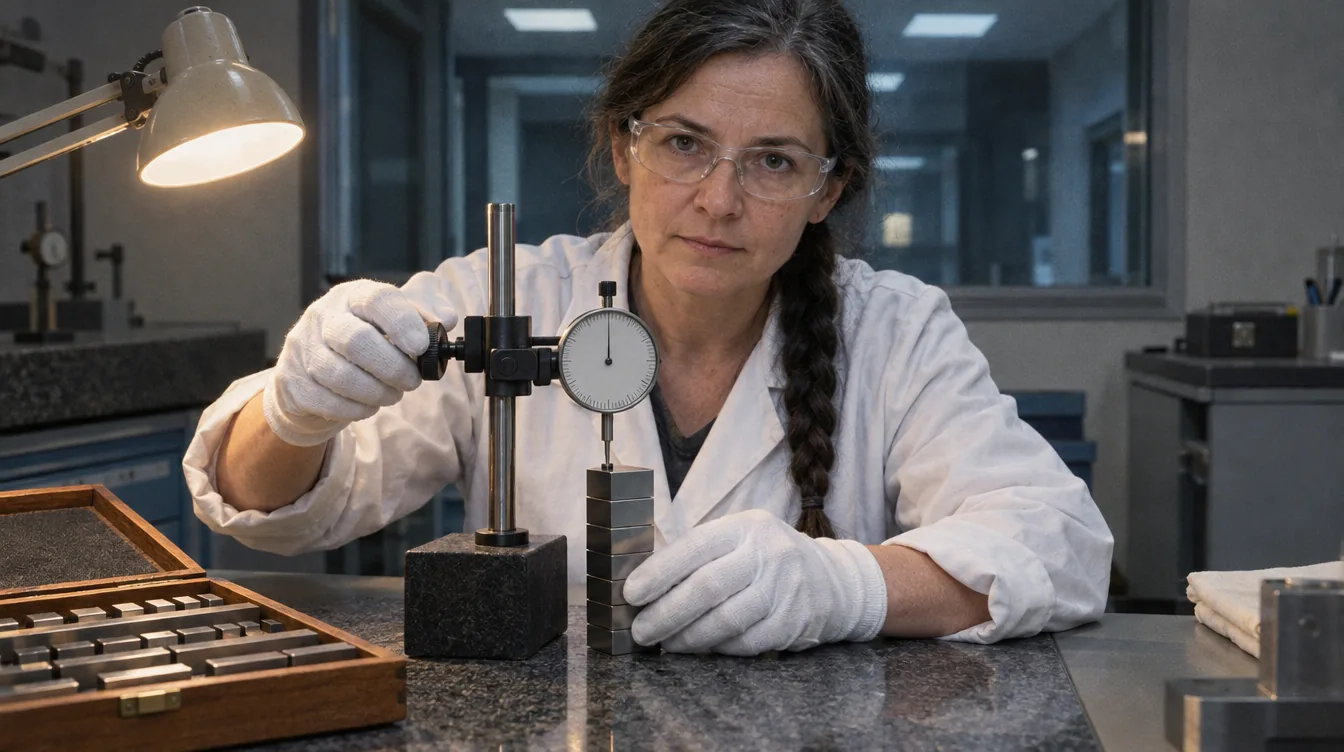
We take over watching the dates, you keep the decisions on fitness
Keeping the register, the calibration schedule, checking the results and assembling the documentation can be taken off the desk. Judging an instrument's fitness and deciding what to do stay with the specialist.
- A date reports itself in advance. - Not in the week it expires, but while a window can still be agreed with production.
- An unfit instrument has its trail identified. - The list of measurements taken since the last correct calibration is produced straight away, not in a panic.
- The documentation is ready before the audit. - Certificates, dates and instrument histories are brought together as you go, not in the week before an inspection.
Scope
What can be taken off metrology
Twenty example tasks. Each one has a human approval point. Below is a selection, and the scope we fit to your measuring equipment.
The instrument register
- A register of instruments with location and the person accountable
- Linking an instrument to the operations it is used in
- The instrument's history with calibration results
- A signal when an instrument has no location assigned
The calibration schedule
- Dates by interval and intensity of use
- A signal when a date is approaching
- A proposed despatch window agreed with production (decision: the specialist)
- The list of instruments away from the plant
- A reminder about an instrument not returned on time
Overseeing the results
- Recording the certificate and the calibration results
- Comparing the result with the requirements for the application
- A signal when drift is visible across successive calibrations
- Judging the instrument's fitness (decision: the specialist)
Unfit instruments
- Marking and withdrawing from use
- The list of measurements taken since the last correct calibration
- Pointing out the batches those measurements concern (assessment: the specialist)
- Notifying quality and production
Documentation for an audit
- A summary of certificates and dates
- Calibration status as at a chosen date
- The history of how unfit instruments were handled
A day's work
Today
- You watch calibration dates in a spreadsheet and in your head
- You learn about an expiring date a week before or after
- You look for an instrument around the floor, because the spreadsheet shows a different location
- The certificates sit in a binder and the results are not compared
- With an unfit instrument you establish the range of measurements by hand
- Before an audit you assemble the summary over several days
With AI assistance
- An approaching date reports itself in advance
- You agree the despatch window before the date passes
- The location and the person accountable are in the register, not in memory
- Successive calibration results are compared and drift is visible
- The range of measurements taken with an unfit instrument is identified straight away
- The summary for the audit is ready, because it is built as you go
- Valid calibrations
fewer instruments used past their date
the date is flagged in advance
- Instrument availability
despatches do not clash with inspection on the line
the window is agreed earlier
- The risk of measuring with an unfit instrument
the range of affected batches is narrow and known
the trail of an instrument's use is recorded
- Documentation readiness
an audit does not need a week of preparation
certificates and statuses are brought together as you go
We start with the register, because without it the dates have nothing to refer to.
- Step 1
A register of instruments with locations
The instrument, the place, the person accountable, the date. It usually emerges at this stage how many instruments are not in the register or are not where they should be.
- Step 2
Signals about dates
A warning in advance and the agreement of a despatch window.
- Step 3
Results and fitness
Certificates in the register, results compared, drift detected.
- Step 4
The trail of use and the documentation
Linking an instrument to measurements and batches. Last, because it needs the earlier steps working.
Common questions
Questions that come up at the first meeting
What about instruments we calibrate ourselves?
They enter the same register, with their own procedure and reference standard. The only difference is who carries out the activity - overseeing the date, the result and the fitness looks identical.
Are fewer people enough to oversee the instruments?
Overseeing instruments is rarely a full-time job for anyone - more often it is a duty added to other work and that is why it slips. Taking over the dates and the documentation does not remove a post, it means the duty stops depending on somebody remembering. That is a completely different conversation from headcount.
Does this fall under the AI Act?
Overseeing measuring equipment is not a high-risk use. The register contains the data of the people accountable for instruments, which is an ordinary data protection matter, handled through the scope of access.
Still have a question that is not here? Book a call

Next step
How many of your instruments are due for calibration within the next month?
We will show you what overseeing instruments looks like when the date reports itself in advance and the trail of use is recorded.