

Role
Site manager
Who notices first that material will not arrive on time - the site manager, or the crew standing idle? Between the two sits a day's work for the whole crew.
Intro call
Four questions we would start with
Who notices first that material will not arrive?
If it is the crew in the morning, the stoppage is already a fact. If it is the site manager the day before, the work front can be switched.
What do you put off first when things get busy on site?
Usually the documentation - and then handover waits, because the reports and the photographs are missing.
How many people from different companies work on your site at the same time?
Every subcontractor has their own schedule, their own dates and their own understanding of what was agreed.
Whose desk does a discrepancy between the design and the build end up on?
And how long passes before somebody settles it, because the front stands idle in the meantime.
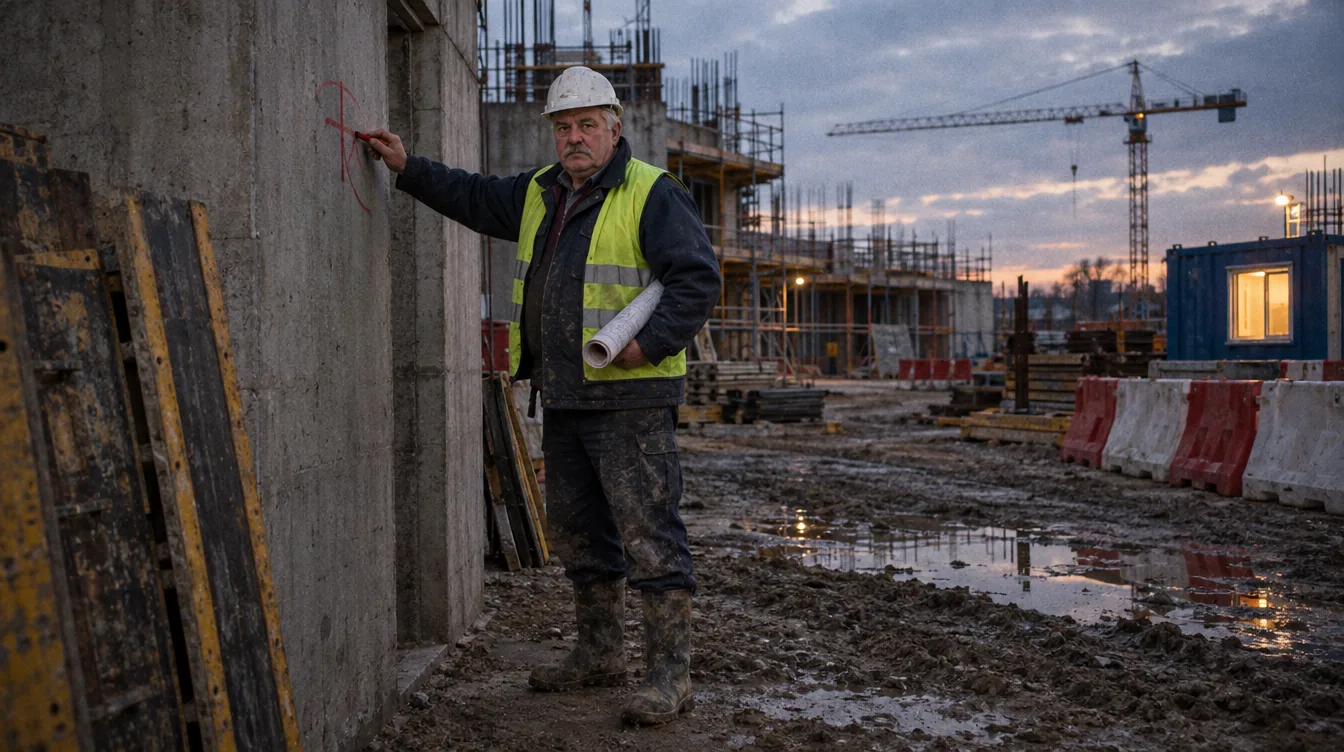
We take over the documenting and the coordination, you keep the running of the site
Keeping the site diary, collecting documentation, coordinating subcontractors and watching materials can be taken off the desk. The decisions on site stay with the site manager.
- The documentation is created on site. - A photograph, an entry and a report from where the work is, not in the evening from memory - because then they will not exist.
- Missing material is a signal, not a morning discovery. - Deliveries against the planned work fronts are visible in advance.
- What was agreed with a subcontractor is recorded. - At handover and in a dispute that is the difference between a conversation and a document.
Scope
What can be taken off running a site
Nineteen example tasks. Each one has a human approval point. Below is a selection, and the scope we fit to the kind of sites you run.
The diary and the documentation
- An entry made from where the work is (content: the site manager)
- Photographs linked to the work front and the date
- The documents required at this stage
- Pointing out gaps before handover
Coordinating subcontractors
- A schedule of work fronts by subcontractor
- A signal when two crews clash on one front
- A register of what was agreed with a subcontractor (recorded by: the site manager)
- The status of issues raised with subcontractors
Materials on site
- The requirement arising from the planned works
- Delivery status against the plan
- A signal when material is missing for a front planned this week
- A register of materials taken onto site
Handovers and reports
- The list of works subject to handover at this stage
- The documents required for a handover
- A draft report with the measurements (raised by: the site manager, accepted by: the supervising inspector)
- A register of handover remarks and their clearance
Health and safety on site
- The list of people allowed on site with their qualifications
- A signal when training or a medical check is expiring
- A register of events and observations (entry: the site manager)
A day's work
Today
- You write the diary entries in the evening, from memory
- The site photographs are on a phone, with no link to a front
- You learn about missing material in the morning, from the crew
- What was agreed with a subcontractor stays in the conversation
- Before handover you hunt for the missing documents
- You check people's qualifications in case of an inspection
With AI assistance
- The entry and the photograph are created at the work front
- The documentation is linked to a place and a date
- Material missing for a planned front reports itself earlier
- What was agreed with a subcontractor is recorded with the task
- Gaps in the handover documentation are pointed out before handover
- Expiring qualifications and medical checks report themselves
- Progress against the schedule
fewer days lost to stoppages and crews clashing
clashes and shortages are flagged earlier
- Complete handover documentation
the handover is raised with the full set of documents
gaps are pointed out before the date
- Stoppages for missing material
fewer mornings with an idle crew
deliveries are set against the planned fronts
- Safety on site
fewer people without valid qualifications
medical check and training dates are watched
We start with documentation at the work front, because it is the first thing to be lost.
- Step 1
Entries and photographs from site
Documentation created where the work is, linked to the front and the date.
- Step 2
Materials against the plan
The requirement, delivery status, a signal when something is missing.
- Step 3
Coordinating subcontractors
Work fronts, crews clashing, a register of what was agreed.
- Step 4
Handovers and health and safety
Complete handover documentation and qualification dates. Last, because it needs the documentation from step 1 to be working.
Common questions
Questions that come up at the first meeting
How is this different from running a project in an office?
On a site most of the information arises in a place with no desk, and a delay on one front immediately blocks the following crews. That changes not so much the scope of the work as the way any record can be created at all.
Will a site need fewer people?
Nothing we propose concerns work at the front - it concerns documentation, coordination and materials. A site manager who does not spend the evening reconstructing the day is on site longer the next day. Crew sizes follow from the scope of works and the schedule, not from a tool.
Does this fall under the AI Act?
Running a site is not a high-risk use. The line concerns data about people on site: the register of qualifications and medical checks is necessary under health and safety rules, but it should not serve to assess employees or to monitor their presence beyond what the rules require.
Still have a question that is not here? Book a call

Next step
How many days last month did a crew wait for material or for another crew?
We will show you what running a site looks like when the documentation is created at the front and missing material reports itself a day earlier.