

Role
Facility management
Who notices first that something in the building has stopped working? Usually the person it bothers - which is to say, after the fact. All the preventive work rests on whether somebody decides to report it.
Intro call
Four questions we would start with
Who notices a fault in the building first?
If it is a user, you are always reacting after the fact. Some faults can be seen earlier - in utility consumption, in the repair history, in inspection dates.
How long is the road from a report to a repair?
If the report goes by email to one person, their absence lengthens that road by several days - and in the meantime the fault bothers everybody.
What do you not do, even though you know it has to be done?
Usually the inspections that are not mandatory - and the refurbishment plan. Failures crowd out prevention, and then prevention crowds itself out of the budget.
When is the decision about a refurbishment made?
If it is after a failure, it is always urgent and always more expensive. A plan based on the repair history lets that decision be brought forward.
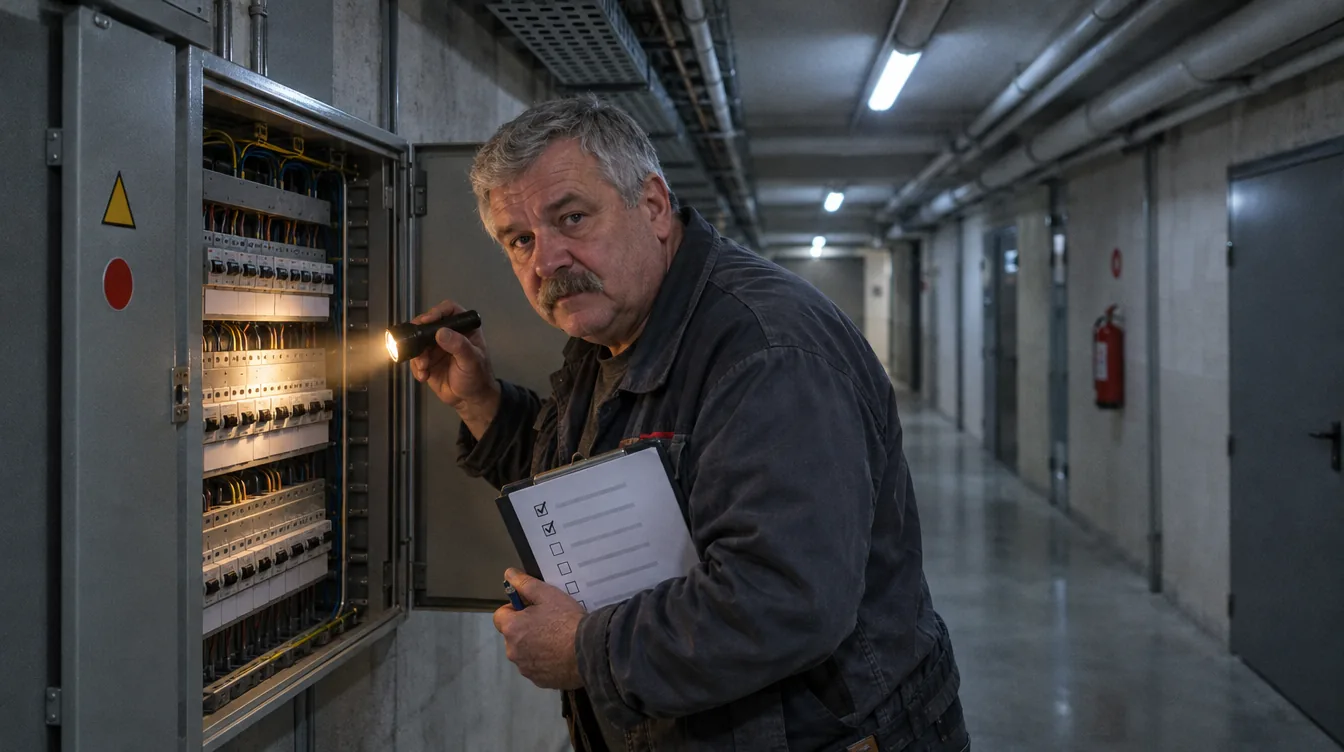
We take over the chasing, you keep the decisions about the building
Handling reports, inspection dates, the register of service contracts and consumption monitoring can be taken off the desk. Decisions about the scope of work, the choice of contractor and the priorities stay with a person.
- Reporting has to be simple. - A photo and a location. The simpler it is, the more faults reach you before they become failures.
- A mandatory inspection is watched without exception. - Dates set by regulation are not a matter of tidiness, they are a matter of the building being fit for use.
- The repair history builds the plan. - What broke three times in a year is a candidate for replacement, not for a fourth repair.
Scope
What can be taken off facility management
Eighteen example tasks. Each one has a human approval point. Below is a selection, and the scope we fit to your process.
Fault reports
- A simple report with a photo and a location
- Setting a priority by the effect on work (verified by: the specialist)
- Routing to the right contractor or service provider
- Status visible to whoever reported it
- Detecting faults that repeat in the same place
Mandatory inspections
- A calendar of the inspections required by regulation
- Reminders far enough ahead to book a contractor
- A register of reports and recommendations
- Tracking how post-inspection recommendations are carried out
Service contracts and contractors
- A register of contracts with their scope and dates
- Checking invoices against the contract
- Repair history by contractor (assessment: the specialist)
- A register of arrangements with contractors
Utilities and the refurbishment plan
- Utility consumption by building and period
- Monitoring consumption with a signal when something is anomalous (assessment: the specialist)
- Maintenance costs by building
- The repair history as material for the refurbishment plan
- Preparing the annual plan (decision: the specialist and the board)
A day's work
Today
- Faults are reported by email, by phone and in the corridor
- Whoever reported it asks about the status, because they do not know anyone received it
- You watch inspection dates in a spreadsheet
- You remember the faults that repeat, but you do not have them summarised
- Anomalies in utility consumption surface with the invoice
- The refurbishment plan appears when something breaks for good
With AI assistance
- A fault is reported with a photo and a location, in a dozen seconds
- The status is visible without anyone asking you
- Mandatory inspections remind you in advance
- Faults that repeat add up to a list of candidates for replacement
- Unusual utility consumption reports itself before the invoice
- The refurbishment plan rests on history, not on the last failure
- Time to fix a fault
a repair does not wait for one person
a report goes straight to the right contractor
- Inspections on time
a building does not lose its fitness for use through a missed date
the calendar is in a system, not in a spreadsheet
- The cost of upkeep
fewer urgent repairs
recurring faults surface as a pattern
- Predictable refurbishment
the plan comes from history, not after a failure
repairs are recorded and summarised
We start with reports and dates.
- Step 1
Simple fault reporting
A photo and a location. We measure whether the number of reports grows - if it does not, reporting is too hard.
- Step 2
A calendar of mandatory inspections
Dates and reminders. The largest risk removed at the smallest cost.
- Step 3
Contracts and contractors
A register of contracts, of arrangements and of invoice checks.
- Step 4
Utilities and the refurbishment plan
Consumption monitoring and the repair history as the basis for the annual plan.
Common questions
Questions that come up at the first meeting
Will facility management need fewer people?
Running a building is largely work on site and nobody takes that away. We take over handling reports, watching mandatory inspections and settling up with contractors - the things that keep the coordinator at a desk. Less time at the desk usually means more walkarounds and fewer faults found by users.
Does this fall under the AI Act?
Facility management is not a high-risk use. The point to watch is surveillance: systems observing the space people work in have separate requirements - which is why we keep utility consumption monitoring well away from observing people.
Still have a question that is not here? Book a call

Next step
Which fault comes back most often despite repeated repairs?
We will show you what running a building looks like when reporting takes a dozen seconds and the refurbishment plan rests on the repair history.