

Role
HR administration
How long does it take you to assemble one person's file for an inspection? The regulations say exactly what belongs in which part of the file - and the documents arrive from four directions, each at its own pace.
Intro call
Four questions we would start with
How long does it take to assemble one person's file?
If it means searching in several places, then during a labour inspection every file is a separate project - and an inspection never asks for one.
Whose desk does a missing document end up on?
Usually yours, even though it was the employee or the manager who was supposed to provide it. You are accountable for completeness without any influence over the pace of delivery.
How do you know that a medical check or a training date is coming up for a particular person?
If it is from a spreadsheet kept by hand, one holiday is enough for someone to start work without valid clearances.
What happens when an employee asks for a document by yesterday?
Usually: you put the current work aside. Certificates are simple and urgent at the same time, so they always beat putting files in order.
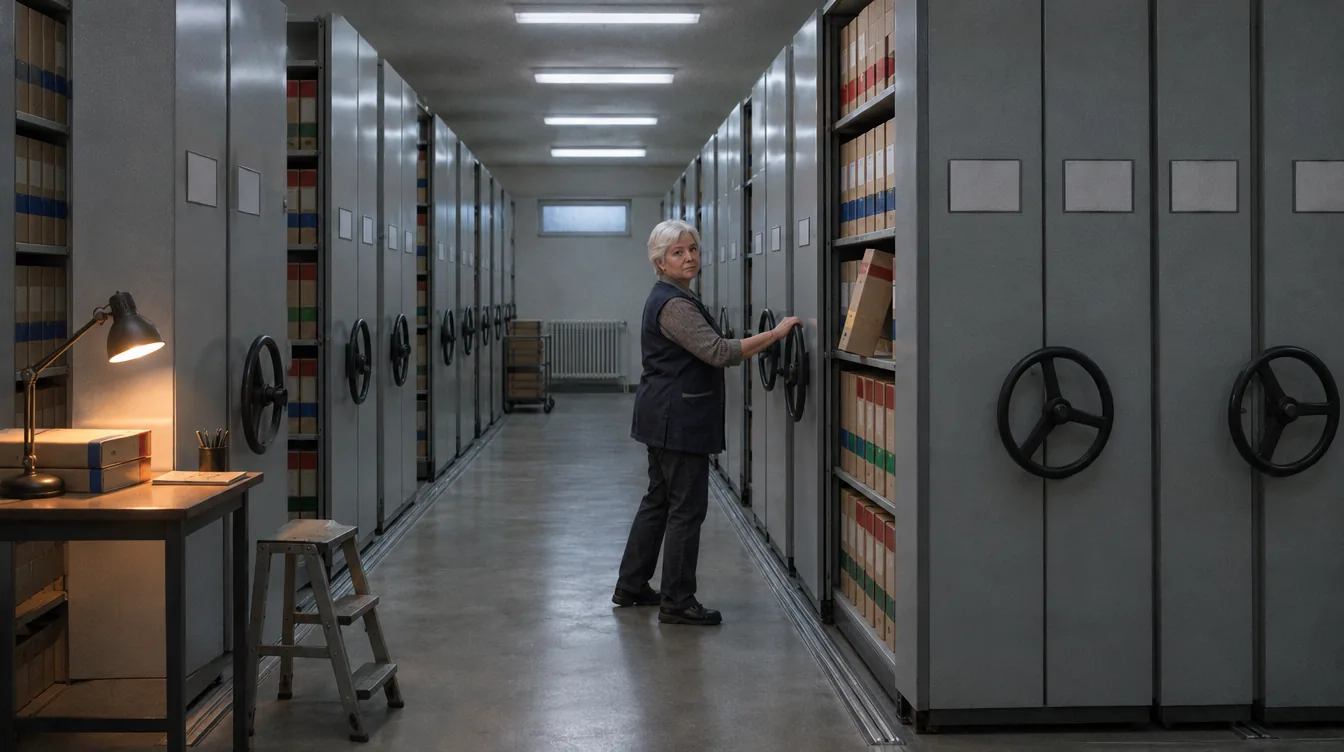
We take over the assembling, you keep accountability for compliance
Checking that files are complete, watching dates, preparing repeat documents and filing them into the required parts can be taken off the desk. Accountability for the compliance of the records stays with the specialist.
- The document is drafted for signature, not instead of a signature. - Certificates and letters are prepared by the system and signed by an authorised person. Nothing goes out without that signature.
- Gaps are visible as they appear. - Not during an inspection and not when an employee leaves, but when they arise - which is when you can still ask for them.
- Access is narrow by default. - Personnel files are documents under a special regime, and we set the scope of access before the rollout, not during it.
Scope
What can be taken off HR administration
Nineteen example tasks. Each one has a human approval point. Below is a selection, and the scope we fit to your process.
Documents at hiring
- The list of documents required at hiring, by type of contract
- A completeness check before the first day
- Preparing the contract and accompanying documents (signed by: an authorised person)
- Reminders to the employee about missing documents
- Filing a document into the right part of the records
Changes during employment
- Documents for a change of terms, role or working hours
- Checking consistency between the documents and the data in the system
- A register of amendments and agreements
- Preparing occasional letters (content: the specialist)
Dates, medical checks, training
- A register of medical check and training dates for every person
- Advance reminders to the employee and the manager
- A flag for anyone without valid clearances
- Referrals for medical checks (signed by: an authorised person)
End of employment and the archive
- The list of steps and documents when someone leaves
- Preparing the employment certificate (approved by: the specialist)
- Checking the file is complete before it goes to the archive
- Retention periods and disposal dates
- A register of personnel file disclosures
- A complete set of documents for an inspection (compiled by: the specialist)
A day's work
Today
- You discover gaps in the documents while tidying up or during an inspection
- You keep track of medical check dates thanks to a spreadsheet and your own memory
- You prepare certificates by hand, putting the current work aside
- When terms change, you work out what has to be added to the file
- Assembling files for an inspection takes several days
- When someone leaves, you reconstruct what is missing
With AI assistance
- You see gaps as they appear, and they go back to whoever has to fill them
- Medical check dates remind themselves, to managers as well
- Certificates are drafted for signature, not from scratch
- When terms change you get the list of documents to assemble
- The set for an inspection is ready at any moment
- When someone leaves, the list of steps is prepared
- Complete files
gaps are filled while you can still ask for them
the completeness check happens as you go
- Checks and training on time
nobody starts work without valid clearances
dates are watched by a system, not in a spreadsheet
- Time to handle a request
the employee gets the document sooner
certificates are drafted for signature, not from scratch
- Ready for a labour inspection
gaps in the files are visible before the inspection, not during it
documents are filed into the right part as they arrive
We start with the dates, then completeness, and the documents last.
- Step 1
A register of dates
Medical checks, training, fixed-term contracts. The first review usually turns up a few dates already passed.
- Step 2
The completeness check
The list of required documents and the gaps pointed out. The effect shows at the first review of the files.
- Step 3
Repeat documents
Certificates and letters prepared for signature. It removes the most interrupting part of the day.
- Step 4
The archive and disclosures
Retention periods, disposal, the register of disclosures. Last, because it needs the files to be in order.
Common questions
Questions that come up at the first meeting
This role exists in order to keep the records. What is left when the records keep themselves?
Records do not keep themselves - they come apart, and that is the difficulty of this role. We take over assembling, watching dates and drafting documents for signature. What stays is what needs knowledge of the regulation and of a particular employee's situation: judging what is needed in a given case and in what form. We do not take that away and we do not try to.
Does this fall under the AI Act?
Keeping employee records is not a high-risk use, as long as employees are not assessed on the basis of them. What does apply are the labour code requirements on the form of the records and the retention periods. The register of file disclosures belongs to a different order - it follows from the accountability principle in data protection rather than from the labour code, although in practice the two are done together.
Still have a question that is not here? Book a call

Next step
How long would it take you today to produce complete files for ten people?
We will show you what HR administration looks like when gaps are visible as they appear and medical check dates remind themselves.