

Role
New product introduction
When do you decide a product is ready for series production - and on what basis? In many plants that decision is a date in the calendar rather than a conclusion from the trials.
Intro call
Four questions we would start with
When is the decision to start series production made?
And whether at that moment you know the trial results, the readiness of the tooling and the state of the training - or whether two of those three are checked after the start.
What do you not know about a new product until you run the first series?
Usually: how long an operation really takes, where the defects arise and what the documentation lacks. The question is whether those lessons stay anywhere.
Whose desk does it land on when something is blocking a launch?
If there is no single answer, the blockers live their own life for weeks.
What happens when the design changes two weeks before the start?
Whether anybody knows which parts of the preparation have to be repeated, or whether it is worked out afresh with every change.
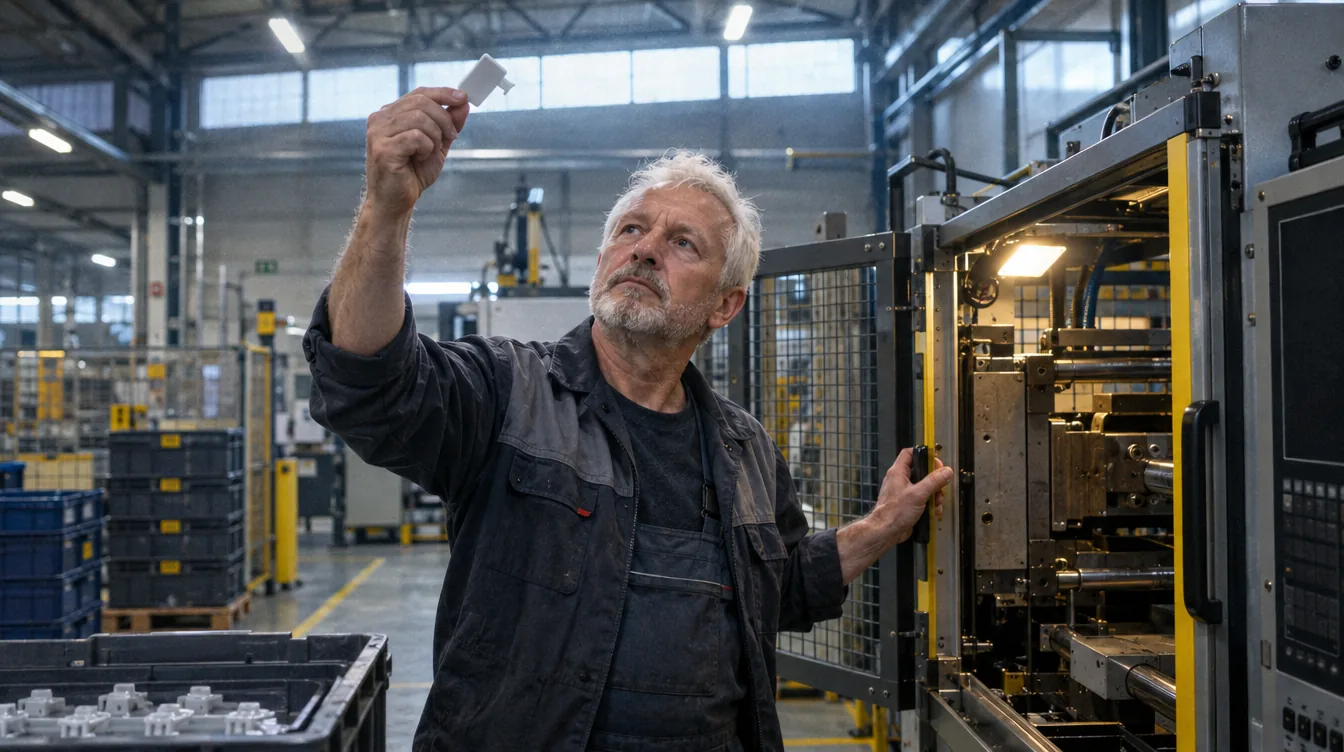
We take over chasing readiness, you keep the decision to launch
Maintaining the readiness list, tracking blockers, collecting trial results and preparing the documentation can be taken off the desk. The decision whether the product goes into series stays with a person.
- Readiness is a visible state, not a declaration. - The tooling, the documentation, the training and the trial results have a status visible without phoning round the departments.
- A change has its effect on the preparation identified. - With a design change it is visible which parts of readiness go back to the start.
- The lessons from a launch stay. - What you learned at this launch enters the checklist for the next one rather than the memory of five people.
Scope
What can be taken off product introductions
Nineteen example tasks. Each one has a human approval point. Below is a selection, and the scope we fit to your launch process.
A project entering production
- A readiness list by area with one status for each
- Linking the project to the design and process documentation
- Pointing out items with no person accountable assigned
- A signal when a date is at risk because an item is not ready
Trials and validation
- A trial schedule with resources and dates
- Recording the trial results in one place
- The deviations found in a trial, set out
- Judging whether a trial result allows moving on (decision: the specialist)
Documentation and training
- The list of documents required for a launch
- The preparation status of each document
- The list of people to be trained and the state of the training
- Confirmation that the workstations are ready (confirmation: the shift supervisor)
The series launch
- A checklist before the series starts
- The blockers still open on the day of the launch
- A register of decisions to start despite open points (decision: the specialist)
- Heightened oversight of the first series
Lessons after a launch
- Comparing times and defects with the assumptions
- The problems encountered after the start, set out
- Lessons entering the checklist for the next introduction (approval: the specialist)
A day's work
Today
- You establish the readiness status by phoning round the departments before every meeting
- At a design change you work out yourself what has to be repeated
- The trial results sit in emails, reports and notes
- The blockers live in a few people's heads, with no single view
- You make the decision to start without knowing how many points are open
- You reconstruct the lessons from the previous launch from memory
With AI assistance
- You see the readiness status without phoning round, in one view
- At a change you see which parts of readiness have to be repeated
- The trial results are in one register, linked to the project
- The blockers have an owner, a date and a visible status
- Before the start you see the list of open points and decide consciously
- The lessons from a launch enter the checklist for the next
- Launching on time
fewer starts moved in the last week
a risk is visible while there is still time to react
- Changes after the start
fewer corrections made during a series
the trials and the readiness are closed before the launch
- Readiness on the floor
the workstations start with current documentation and training
the readiness status is visible rather than declared
- Repeatable launches
the next launch draws on the lessons of the last
the lessons enter the checklist
We start with the readiness list, because it replaces phoning round the departments.
- Step 1
A readiness list with owners
Areas, statuses, people accountable. One view instead of a round of calls.
- Step 2
Blockers and dates at risk
A signal about an item that moves the launch date.
- Step 3
Trials and documentation
A register of results and document statuses linked to the project.
- Step 4
Lessons after a launch
Comparing the assumptions with delivery and carrying the lessons into the checklist. Last, because it needs a closed launch.
Common questions
Questions that come up at the first meeting
What if we have to start despite open points?
That is a normal situation and that is why we record it as a conscious decision with the list of open points. The difference from today is that three months later it is known what was open on the day of the start - and that usually explains half the problems with the first series.
Will product introductions need fewer people?
A launch has nowhere to shrink - it has a fixed number of things to prepare and a fixed date. We take over phoning round the departments for readiness status, the work that eats a day before every project meeting. The same team runs more launches at once, or runs them more calmly. Which of the two is for you to settle.
Does this fall under the AI Act?
Running product introductions is not a high-risk use. Training data concerns people, so the data protection rules apply - we set the scope and the retention so that it serves confirming a workstation's readiness rather than assessing employees.
Still have a question that is not here? Book a call

Next step
How many points were open on the day of your last launch?
We will show you what a launch looks like when readiness is visible without phoning round the departments and the lessons carry into the next project.