

Role
Quality complaints
How long does it take to get from a defect in a client's hand to the batch, the shift and the settings it arose on? If it is days, the answer is technical. If it is weeks, it is diplomatic.
Intro call
Four questions we would start with
How long does it take to establish which batch a defective item came from?
From the number on the item to the order, the shift and the process parameters. That road is usually longer than it should be.
Whose desk does a complaint end up on when the cause lies with a supplier?
And whether the case then goes on as a complaint to the supplier, or stops at establishing fault.
What do you do when the production data and the inspection report say different things?
If the answer is "we trust the report", then root cause analysis is a defence rather than an investigation.
Which type of defect comes back most often?
If you do not know, every complaint is a one-off event - and it rarely is.
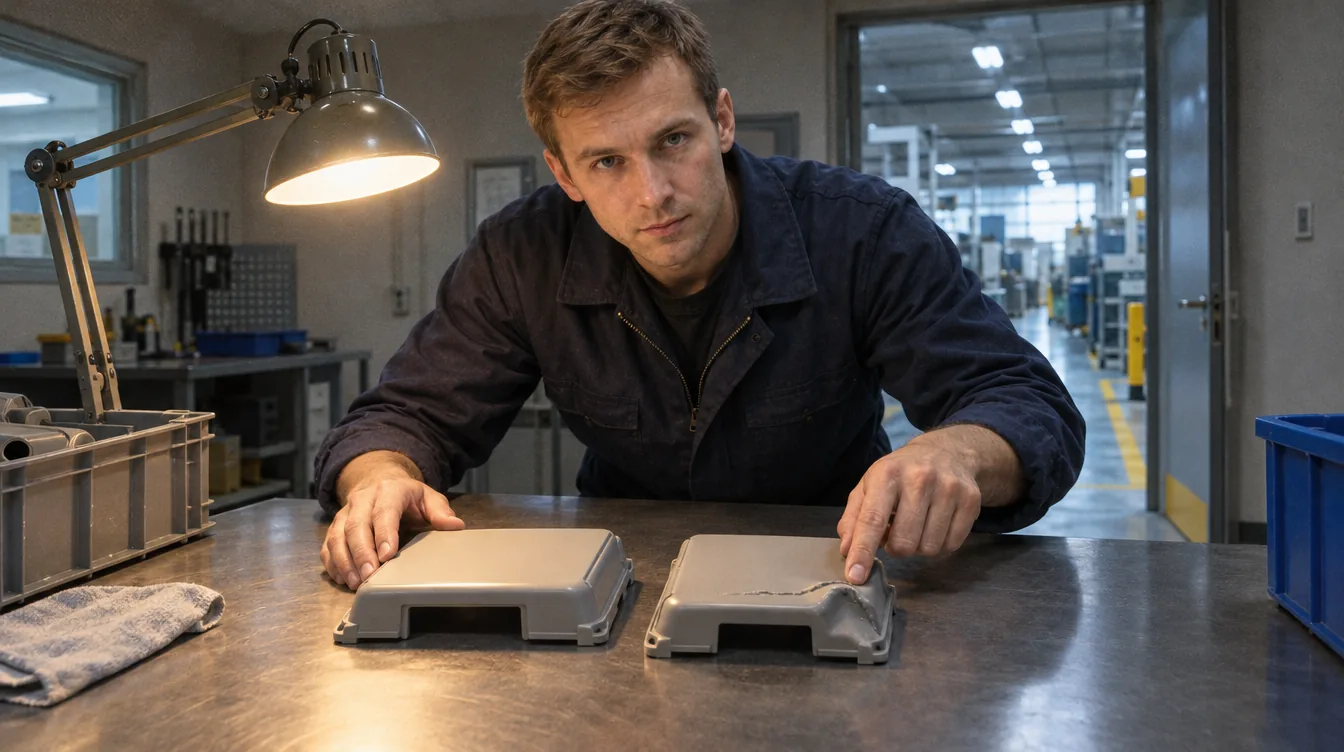
We take over reconstructing the history, you keep the root cause analysis
Identifying the batch, gathering the process data, running the case and drafting the reply can be taken off the desk. Establishing the root cause and judging the actions stay with the specialist.
- The road from item to batch is short. - The item number leads to the order, the shift, the machine and the inspection results without reconstruction from four systems.
- The process data from the day of production is available. - Parameters, measurements and events from that particular run, not monthly averages.
- A recurring defect is visible. - The same defect at the same operation in three complaints is a pattern that has to be pointed out, not noticed by chance.
Scope
What can be taken off quality complaints
Nineteen example tasks. Each one has a human approval point. Below is a selection, and the scope we fit to your products.
Taking in a technical complaint
- One route in for notifications from the client and from sales
- Pulling the description of the defect, the item number and the date out of the attachments
- An initial classification by type of defect (confirmation: the specialist)
- Acknowledgement to the client with the date for a reply
Identifying the batch
- Linking the item number to the production order
- Pointing out the shift, the machine and the operators who ran the batch
- Process data from the day and hour of production
- The inspection results for that batch
- The extent of the batch that may be affected (decision: the specialist)
Root cause analysis
- The events from the production of that run
- Comparison with runs that had no complaints
- Pointing out divergences between data sources
- Conclusions and a hypothesis for the cause (determination: the specialist)
The reply to the client
- A draft technical reply with the findings (approval: the specialist)
- Consistency with earlier replies in the same matter
- A register of correspondence in one place
Preventing recurrence
- Defects summarised by type, product and operation
- Pointing out a defect recurring despite a corrective action
- Linking a complaint to the material supplier (assessment: the specialist)
A day's work
Today
- You establish the batch by going through orders and shift logs
- You reconstruct the process data from the day of production, if it exists at all
- The client's reply deadline chases you from day one
- With conflicting sources you take the one that is at hand
- You write the reply from scratch, even for a defect already known
- You do not know whether the same defect has come back before
With AI assistance
- The item number leads to the order, the shift and the machine straight away
- The process data from that run is available rather than reconstructed
- The reply deadline is watched in advance
- A divergence between sources is pointed out rather than missed
- The reply has a draft based on the findings, you supply the wording
- Recurrence of a defect is visible in a summary
- The technical reply
the findings reach the client without reconstructing the batch
batch identification is in the system, not in notebooks
- Establishing the root cause
fewer complaints closed with no cause established
the process data for the run is available
- Recurring defects
the same defect does not come back a fourth time unnoticed
the pattern is pointed out automatically
- A basis for deciding the extent
the extent of an action follows from the production trail rather than from an estimate
the data about the run allows the batch boundaries to be set
We start with batch identification, because everything else depends on it.
- Step 1
The road from item to order
Linking the item number to the order, the shift and the machine. Usually the hardest and the most rewarding step.
- Step 2
Process data and inspection results
The parameters and measurements of that particular run available with the case.
- Step 3
Running the case and the reply
Deadlines, a draft reply, a register of correspondence.
- Step 4
Recurrence summaries
Defects by type and operation, with recurrences pointed out. Last, because it needs several months of data.
Common questions
Questions that come up at the first meeting
How is this different from commercial complaints?
There the dispute is about entitlement and settlement with the client. Here the subject is the technical cause and the extent of the batch. Sometimes one case is both - then it is worth having both paths see the same notification, but the decisions and the deadlines stay separate.
Will technical complaints need fewer people?
Establishing a root cause is investigative work and needs somebody who knows the product and the process. We take over the road from item number to production data - what today takes most of a case's time and needs nobody's experience. The specialist starts from the facts instead of from hunting for them, and that usually shows in the number of cases closed with an established cause.
Does this fall under the AI Act?
Analysing complaints is not a high-risk use. The line runs at pointing out the operators who ran a batch: it is sometimes necessary to establish the cause, but that data serves the analysis of the process and should not enter any assessment of employees.
Still have a question that is not here? Book a call

Next step
How long is the road from an item number to its production parameters?
We will show you what handling technical complaints looks like when identifying a batch takes minutes and a recurring defect is visible.