

Role
Bid and tender specialist
How many times this year has someone on your team retyped into a spreadsheet requirements the company had already answered before? The deadline is fixed and every procedure is different - but most of the content you need is sitting in your earlier bids.
Intro call
Four questions we would start with
We do not yet know where the repetitive work sits in your company. We do know what to ask to establish it within an hour.
How do you start work on a new procedure?
If it starts with hunting for previous bids across drives, mailboxes and the colleague next door, the first day after the notice is gone before a single sentence of the bid exists.
Who retypes the requirements from the documentation into a spreadsheet?
Dozens, sometimes hundreds of entries. The task adds nothing to the content the buyer evaluates, and it eats the time of the one person who can write the substantive part.
What happens when a document turns out to be missing in the final hour?
Some gaps can be filled on request, and that is the good news. The bad news is that others cannot be - a missed deadline, a missing signature, a missing piece of evidence where the buyer allowed no supplementation. The question is whether you know which is which before the rush starts.
When is the price decided?
If it happens on the last day, alongside assembling attachments and closing the content - then the most important decision in the whole procedure is being made at the worst possible moment.
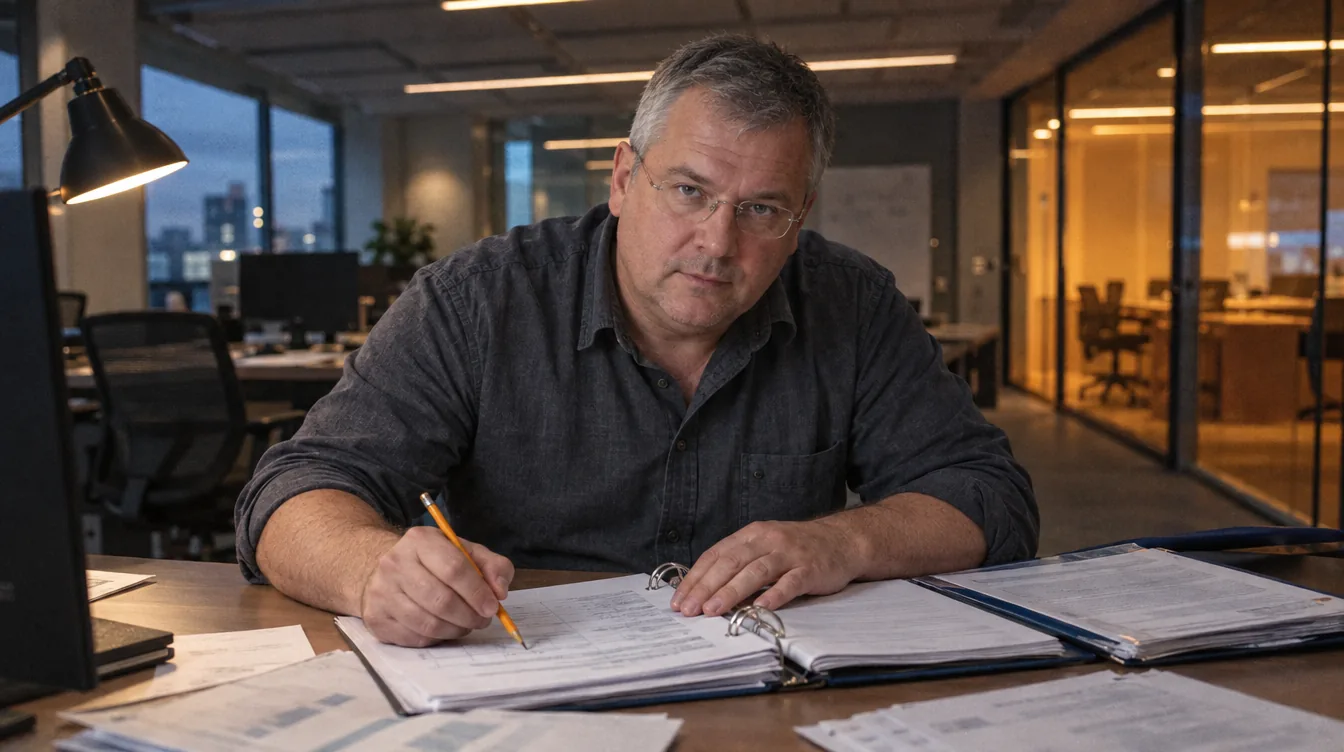
We take over the reproducing, you keep the deciding
Pulling out requirements, finding earlier answers and assembling the formalities is done by the machine. What stays in the bid and what price you submit it at is decided by you.
- We are not replacing your specialist. - We give them a starting draft built from your earlier bids and from the procurement documents. They decide what survives, what has to be written from scratch and whether you bid at all.
- Nothing goes out without your approval. - Not an answer to a requirement, not a question to the buyer, not the set of attachments. In public procurement the signature is personal anyway - and it stays that way.
- Every suggestion shows where it comes from. - Which procedure it is from and how that one ended. Without that you cannot judge whether it is worth repeating.
Scope
What can be taken off the bid-writing desk
Twenty-eight example tasks. Each one has a human approval point. Below is a selection, and the exact scope we fit to your process.
Reading the procurement documents
- Extracting requirements from the documents into a working matrix (approval: the specialist checks completeness)
- Flagging requirements you do not meet, as input to the bid decision (go/no-go decision: human)
- A summary of the procedure dates: questions, submission, bid validity
- Pointing out clauses that differ from this buyer's previous procedures
- Preparing a list of questions to the buyer drawn from ambiguous clauses (sent by: the specialist)
- Comparing versions of the documents after the notice is amended and showing what changed
Building the content of the bid
- Searching the archive for answers to the same or a similar requirement
- A starting draft of the substantive answer with its source marked (edited and approved by: the specialist)
- Fitting a reference description to the criteria of a specific procedure
- Preparing the team and experience description against the qualification requirements
- Cutting content down to character or page limits without losing required elements
- Making terminology consistent across the document, one name for one thing
- Checking that every requirement in the matrix has its counterpart in the bid
Formal documents and compliance
- A list of required attachments derived directly from the documentation
- Checking the validity of company documents against the procedure dates
- Telling gaps that can be supplemented from those that cannot (assessment: the specialist)
- Filling repetitive forms with company data (signed by: an authorised person)
- Verifying that the set is complete before submission
- Spotting discrepancies between the form and the bid content, a different number, a different name, a different date
- Preparing the powers of attorney and declarations that repeat in every procedure
Pricing and calculation
- Collecting cost items from earlier procedures of similar scope
- Pointing out pricing-form items with no cost assigned
- Checking the totals and the consistency of the calculation with the scope description
- A summary of historical winning prices in similar procedures (the bid price: always a human decision)
After submission
- A register of submitted bids, deadlines and statuses
- A summary of the outcome together with the other bidders' prices
- Lessons from a loss: what set our bid apart from the winning one
- Adding what worked to the archive, so the next bid starts from a better place
A day's work
How work on a procedure changes
Today
- The first day after the notice goes on reading the documents and retyping requirements into a spreadsheet
- For every harder requirement someone searches whether the company has answered it before, in mail, on the drive, at a colleague's desk
- The reference description is written again, although a finished one sits in another bid
- The day before the deadline someone checks whether the certificates have expired
- The last evening before submission goes on assembling attachments, not on closing the content
- After the result nobody goes back to the bid, because the next procedure is already running
With AI assistance
- The requirement matrix is ready and waiting, your specialist checks it is complete and marks what rules you out
- For every requirement you can see what you answered before, in which procedure and with what result
- The reference description arrives as material fitted to the criteria, to be corrected rather than written
- Validity dates are watched by a register, not by somebody's memory
- The last day is left for the price decision and the signature
- After the result you get a summary of what set your bid apart from the winning one
For the organisation
What changes in the company, not only at this desk
- Capacity
you handle more procedures without growing the team
time stops going on searching and retyping, and starts going on substance and on the bid decision
- Formal risk
a whole class of errors that sink a good bid disappears
the attachment list and the validity check are derived from the procurement documents, not from memory
- Organisational memory
answers stop being the property of whoever wrote them
the specialist leaving no longer takes ten years of bidding archive with them
- The bid decision
you know early whether you are bidding
disqualifying requirements are visible before the bid decision, not after the bid is written
Rollout
How we start
We start with one of your procedures, not with rebuilding the whole bidding process.
- Step 1
We take one procedure apart
We take the last one you closed and break it into tasks: how long reading the documents took, how long finding earlier content, how long the writing itself, how long the formalities. That conversation is what shows where the repetitive work really is - usually somewhere other than the team expects.
- Step 2
We load the archive
Your earlier bids, reference descriptions and team profiles go into one searchable place. The longest stage and the most often underestimated - without it the suggestions have nothing to be built from.
- Step 3
A pilot on a live procedure
The requirement matrix and the suggestions from the archive run on a real, current procedure. The bid is edited, approved and signed by your person - nothing changes in who is accountable.
- Step 4
We extend
The formalities, the calculation check and the results register follow. Every further area comes in under the same access and oversight rules we set in the pilot.
Common questions
Questions that come up at the first meeting
Will bids now be written by a machine?
No. The machine reproduces what you have already written and organises the procurement documents. The decisions that settle the outcome - whether we bid, what we promise the buyer, at what price - stay with the specialist. What changes is the proportion: less reproducing, more time for exactly those decisions.
What if the system suggests an answer from a bid that lost?
That is why every suggestion comes with the information about which procedure it is from and how that one ended. An answer from a losing bid is often good - you can lose on price - but it is the specialist who decides whether to repeat it. An archive without the results would be copying blind.
In public procurement, is preparing a bid this way allowed?
Yes. The rules govern the content, the form and the submission deadline of the bid, not the tools the bidder prepares it with. Declarations and the signature stay personal, and in our approach no automation replaces them. A separate matter is the confidentiality clauses in a specific procedure, and those are covered below.
Our references are confidential towards our clients. What about that?
The archive knows those limits at the level of a single description: which client agreed to be named, which only to an anonymous description, and which may not be cited at all. The suggestion respects those settings instead of leaving that knowledge in the head of whoever happens to be writing the bid.
We have ten years of bids in PDFs and mailboxes. Is that usable at all?
This is the question that decides the whole thing, so let me answer it plainly: the quality of the archive determines the quality of the suggestions. Old bids can be put in order, but it is a labour-intensive stage and it has to be counted into the schedule instead of pretending it is not there. If the material is scattered and incomplete, the first result will be weaker than on material that is in order.
Does this mean we need fewer people in the bid team?
That is not the point here. Most bid teams drop procedures not because they are not worth it, but because they will not get them submitted in time. If putting together the repetitive part stops eating two days, the same team handles more procedures - and has the time to write the important ones genuinely for that client, instead of gluing them together from previous ones. What you do with that capacity is your decision, not ours.
Does this fall under the AI Act?
Preparing your own commercial bid is not a high-risk use under the AI Act - nobody is being assessed here and no decisions are being made about people. The obligations come down to transparency and oversight of how the system works, and we take both on ourselves and describe them in the rollout documentation.
Still have a question that is not here? Book a call

Next step
How many procedures do you drop because there is nobody to put them together?
We will show you what work on a procedure looks like when reproducing earlier content stops eating the first days.