

Role
Category manager
How quickly do you find out that a product has stopped selling? If it is a month later, the order for the next quarter was placed before anyone noticed.
Intro call
Four questions we would start with
How quickly do you find out that a product's sales have changed?
If it is from the monthly report, you are reacting to a trend that started six weeks ago.
What do you not know about a category until a bestseller runs out?
Usually: how much you lose on stockouts, because lost sales appear in no report.
How many times a season do you change decisions about the range?
If it is once, at planning, then the category lives the way it was planned rather than the way people buy.
How do you know the category's margin does not come from a handful of lines?
If you look at the total, you may be funding the rest of the range from three products.
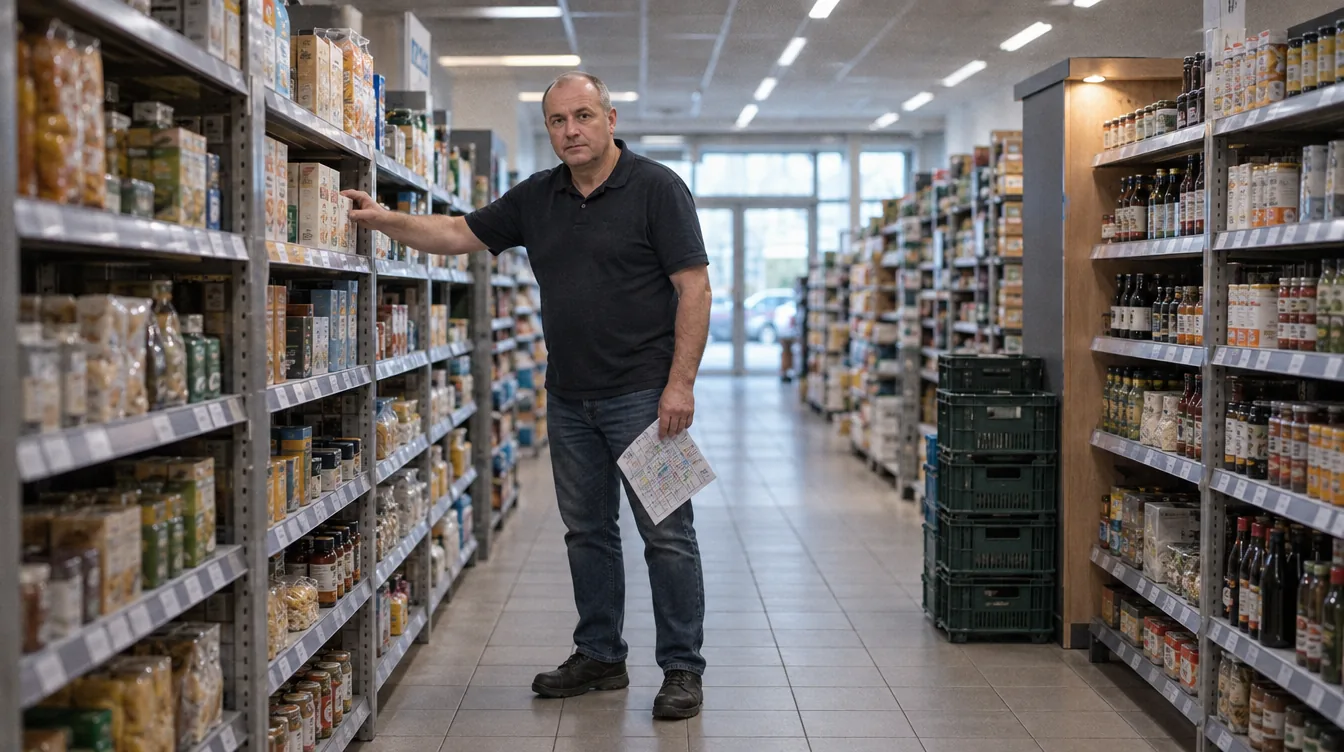
We take over the analysis and the monitoring, you keep the decisions about the range
Summarising sales, detecting changes, monitoring availability and preparing material for negotiations can be taken off the desk. Deciding what belongs in the category stays with a person.
- A change of trend is a signal, not a conclusion from a report. - A product starting to slow down reports itself, before it reaches a report.
- A bestseller running out is visible before it hurts. - The availability of the top lines is watched separately, because that is what the category earns on.
- Profitability is seen line by line, not in the total. - It is clear which products actually carry the category and which only take up space.
Scope
What can be taken off running a category
Twenty-one example tasks. Each one has a human approval point. Below is a selection, and the scope we fit to your range.
Category sales analysis
- Sales by line with periods compared
- A signal about a product whose sales have clearly changed
- Stock turn by line
- Pointing out lines with no sales in the period
Choosing the range
- A proposal of lines to withdraw (decision: the category manager)
- A summary of products whose function overlaps
- Material for the decision to introduce a new line
- Comparing new lines' results against the assumptions
Prices and promotions
- A comparison of prices with the market (assessment: the category manager)
- Promotion results by line and period
- Pointing out promotions that did not increase sales
- The effect of promotions on the category margin
Display and availability
- Planogram execution against the plan (assessment: the category manager)
- Share of shelf against share of sales
- Bestseller availability by location
- A signal when a fast-moving line is out of stock
- A summary of sales lost to stockouts
- Pointing out slow-moving stock
Reviewing the category's suppliers
- Suppliers' share of category sales
- Delivery reliability by supplier
- Material for a conversation about terms (decision: the category manager)
A day's work
Today
- You analyse sales from the monthly report
- You learn about a product's sales falling with a delay
- You notice a bestseller is out of stock when a store reports it
- You see the category margin as a total, not line by line
- You judge promotion results from an impression and from turnover
- You hold the conversation with a supplier without data on their share
With AI assistance
- A change in a product's sales reports itself within weeks
- Products with no turn and slow-moving stock are pointed out
- A fast-moving line running out is flagged straight away
- You see margin line by line, so you know what carries the category
- Promotion results are calculated, including the unsuccessful ones
- For the conversation with a supplier you have their share and their reliability
- Stock turn across the range
fewer lines taking up space without selling
lines with no turn are pointed out
- Bestseller availability
fewer sales lost to stockouts
the availability of the top lines is watched separately
- Category margin
it is clear which lines actually earn
profitability is seen line by line
- Reacting to a trend
the decision is made on a sales signal, not at the quarterly review
a change in sales is flagged rather than read out of a report
We start with signals about changes in sales, because they shorten response time most.
- Step 1
Sales by line with signals
Trend changes, lines with no turn, periods compared.
- Step 2
Availability and lost sales
Bestsellers watched separately, stockouts flagged straight away.
- Step 3
Margin and promotion results
Profitability by line and the effect of promotions calculated.
- Step 4
The category's suppliers
Share of sales and reliability for commercial conversations. Last, because it needs history.
Common questions
Questions that come up at the first meeting
How is this different from a category buyer?
In Polish retail the category manager usually runs the category as a whole - the range, prices, display and the commercial terms with that category's suppliers. The buyer, where it is a separate role, is accountable for the purchasing process and framework agreements across more than one category. The line is drawn differently in both directions, and it is worth settling it at the outset, because it decides whose decisions this scope describes.
Will a category be run by fewer people?
The number of categories and of suppliers does not fall because of a tool, and it is those that determine the headcount. Taking over the analysis and the availability monitoring changes something else: the category manager stops reacting to a trend a month late. At supplier conversations and range decisions they stay where they were.
Does this fall under the AI Act?
Category management is not a high-risk use. If the analysis covers the buying behaviour of individual customers, data protection rules apply - aggregated data is usually enough, with no profiling of individual people.
Still have a question that is not here? Book a call

Next step
How much did you lose last quarter to bestsellers being out of stock?
We will show you what running a category looks like when a change of trend is a signal and profitability is visible line by line.