

Role
Complaints
What do you not know about a complaint until you have collected documents from three departments? The statutory deadline runs from the notification, and the evidence arrives at its own pace.
Intro call
Four questions we would start with
What do you not know about a case until you have gathered the documents?
The order history, the terms, earlier reports, photographs. Half the deadline passes before you assemble it - and the deadline is statutory and does not negotiate.
Whose desk does an ambiguous case end up on?
Usually yours, and usually with no recorded rule. With no rule, the outcome depends on how hard the client pushes - and that is the worst possible criterion.
When is the decision to uphold a complaint made?
If it is near the end of the deadline, it is made in a hurry and often in the client's favour, because that is safer. That is a cost decision taken without counting.
What do you do when both sides' evidence says different things?
That is daily life in this role. The question is whether you have it recorded how you settled similar cases - or whether you work it out afresh each time.
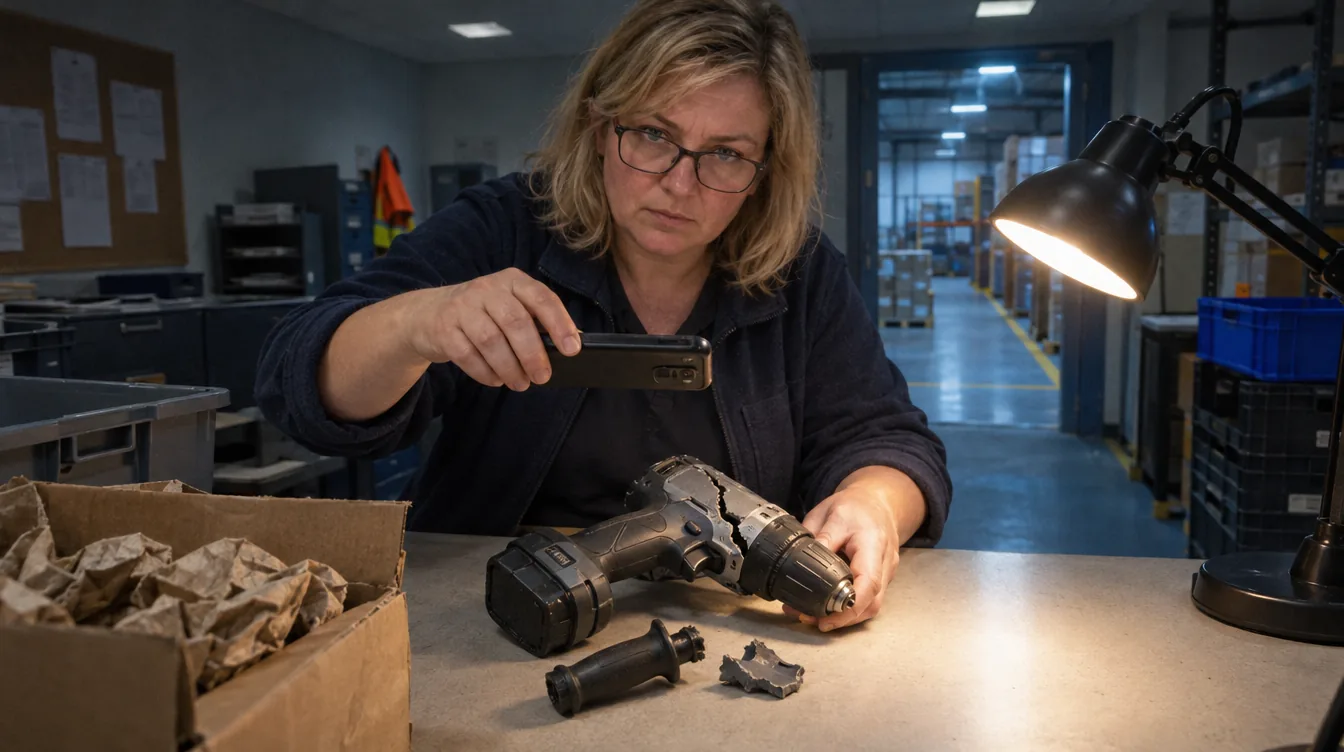
We take over the assembling, you keep the deciding
Gathering the documents, watching deadlines and preparing the material for a decision can be taken off the desk. Deciding a complaint stays with a person - and we propose nothing else here.
- A decision to uphold always goes through a person. - A complaint concerns the client's rights and the company's money. An automatic decision would be a legal and a reputational risk at once.
- The material for the decision is complete from the start. - The history, the documents, the photographs, similar cases - gathered before the deadline starts to press.
- Similar cases are visible. - So that the same case is not decided one way now and another way later - because that is what clients compare with each other.
Scope
What can be taken off complaints handling
Nineteen example tasks. Each one has a human approval point. Below is a selection, and the scope we fit to your process.
Taking in a complaint
- Taking in a notification from every channel with the date recorded
- Recognising the subject of the complaint and its basis (verified by: the specialist)
- Checking the notification is complete and asking for what is missing
- Acknowledgement with the date for a decision
- Detecting a further complaint from the same client in the same matter
Gathering the evidence
- The order, delivery and earlier contact history
- The documents and photographs attached by the client
- Enquiries to departments for information on the case (sent by: the specialist)
- The warranty and contract terms applying to that client
- Similar cases and how they were decided
The decision and the communication
- The material for the decision with the full facts (decision: the specialist)
- The statutory deadline and the time remaining
- Preparing the reasons for the decision (edited and sent by: the specialist)
- A register of decisions with their reasons
- Handling an appeal and its history
Root causes
- Grouping complaints by cause (assessment: the specialist)
- Pointing out the products and processes generating the most complaints
- The cost of complaints upheld
- Material for quality and production about recurring defects
A day's work
Today
- You gather the documents by emailing three departments
- You watch the deadline in a spreadsheet and in your head
- At an ambiguous case you search for how you decided a similar one
- You write the reasons from scratch with every decision
- Everyone knows the causes of complaints, but nobody summarises them
- At an appeal you reconstruct the case from the correspondence history
With AI assistance
- The full set of documents is waiting before you sit down to the case
- You see the deadline and the time remaining with every complaint
- Similar cases and their outcomes are at hand
- The reasons start from the facts of the case, you edit them
- The causes add up to a summary for quality and production
- At an appeal the whole history of the case is in one place
- Time to a decision
the decision is made before the end of the deadline, not on the last day
gathering the evidence stops eating half the time
- Consistent outcomes
similar cases end similarly
earlier outcomes are visible at the decision
- The quality of the reasoning
the outcome can be defended to the client and to a consumer authority
the decision rests on the full facts rather than on deadline pressure
- Getting to the cause
a defect stops coming back
complaints are grouped by cause rather than only counted
We start with the deadlines and the gathering, not with the deciding.
- Step 1
Deadlines and the state of cases
A register with dates and the time remaining. The first review usually reveals cases close to the deadline that nobody remembered.
- Step 2
Gathering the evidence
The history and the documents gathered automatically when a case is opened. This is where most of the saving comes from.
- Step 3
Similar cases and the reasoning
A register of outcomes and material for the reasons. The decision remains entirely with a person.
- Step 4
Root causes
Grouping and summaries for other departments. Last, because it needs several hundred cases.
Common questions
Questions that come up at the first meeting
Will complaints need fewer people?
A complaint is decided on a judgement of whether something is owed to the client - and that is a human decision and stays one. We take over assembling the documentation, watching the deadlines and drafting the replies. A team that is not reconstructing a case's history before every decision closes them faster and misses fewer deadlines. The number of people follows from the volume of complaints, not from a tool.
Does this fall under the AI Act?
Handling complaints is not a high-risk use as long as a person decides. Automatically rejecting a consumer's complaint would be a decision producing legal effects for an individual - and that is why we do not do it, however clear-cut a case appears.
Still have a question that is not here? Book a call

Next step
How many of your complaints are decided on the last day of the deadline?
We will show you what deciding complaints looks like when the evidence is gathered at the start and similar cases are visible at the decision.