

Role
Fleet coordinator
Who notices first that something is wrong with a vehicle - the driver, the workshop or the inspection? The answer says whether you repair faults or learn about them from an invoice.
Intro call
Four questions we would start with
Who notices a fault in a vehicle first?
If it is the workshop at a service, then weeks passed between the fault and the repair - and usually a cost several times higher.
When is the decision to replace a vehicle made?
If it is after the third major repair, the decision rests on fatigue rather than on running cost.
How many times a year does a vehicle stand idle because a date was missed?
A service, a roadworthiness test, insurance, the driver's licence - any of these dates can take a vehicle off the road.
What do you not do with the fleet, even though you know you should?
Usually: you do not compare running costs between vehicles, because the data is in invoices rather than in a summary.
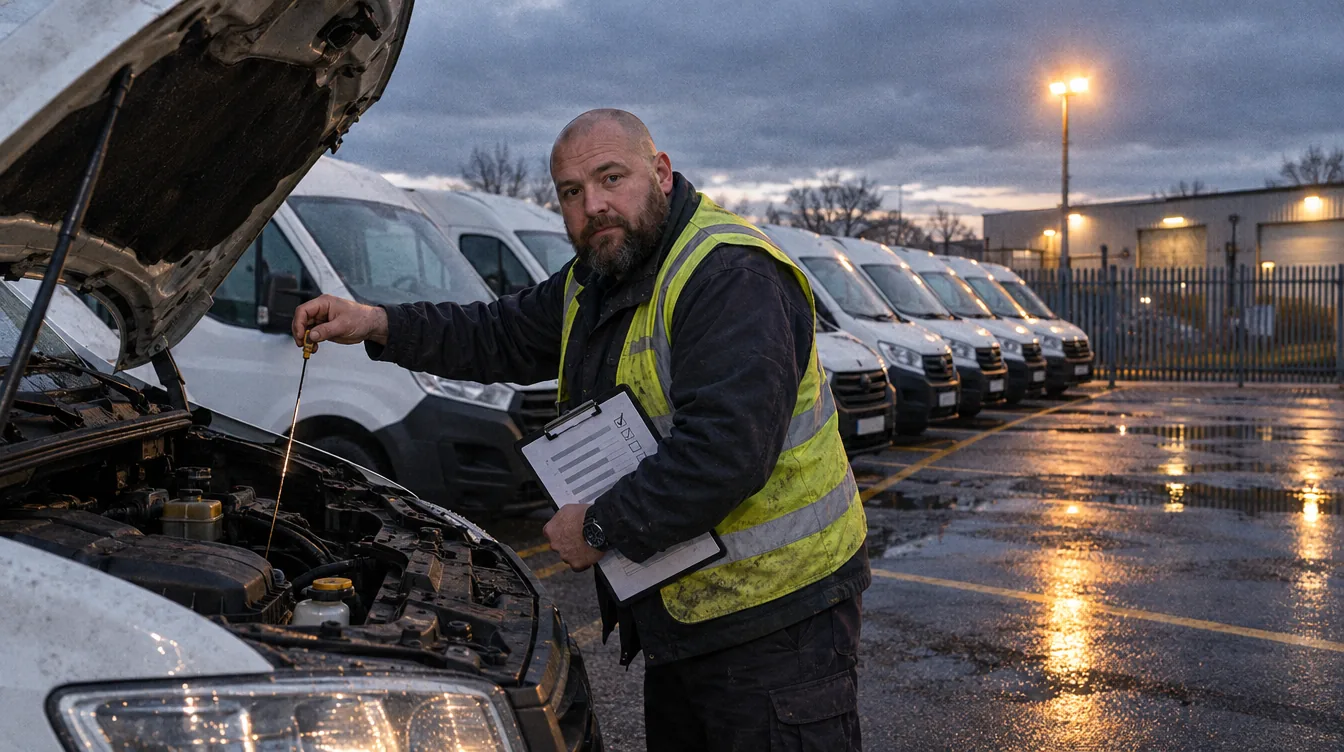
We take over the records and the dates, you keep the decisions about the fleet
Keeping the records, watching dates, collecting reports and summarising costs can be taken off the desk. Decisions about repairs, replacement and the shape of the fleet stay with the coordinator.
- A date reminds you earlier than a week before. - Services, tests, policies and drivers' licences share one calendar with advance notice.
- A fault has a reporting route from the vehicle. - The driver reports it when they notice it, not at the next service.
- Cost comes back to the vehicle. - Fuel, repairs and servicing brought together show which vehicle is expensive - before it becomes very expensive.
Scope
What can be taken off fleet coordination
Twenty example tasks. Each one has a human approval point. Below is a selection, and the scope we fit to your fleet.
Vehicle records
- A register of vehicles with the driver and the location assigned
- The vehicle's documents in one place
- The vehicle's history with repairs and services
- A signal when a vehicle has no user assigned
Services and dates
- A calendar of services, roadworthiness tests and policies
- A signal when a date is approaching
- Agreeing a service window against the delivery schedule
- Confirmation that a service was carried out, with the document
Repairs and breakdowns
- A fault reported by the driver through one route
- Assigning the report to a workshop (decision: the coordinator)
- The status of the repair and the expected collection date
- A summary of repairs repeating on the same vehicle
- A signal when a vehicle is unavailable longer than assumed
Fuel and running costs
- Refuelling summarised by vehicle
- A signal when consumption departs from what is typical for the vehicle
- Running cost per kilometre by vehicle
- Material for a decision to replace a vehicle (decision: the coordinator)
Drivers and licences
- A register of licences and their expiry dates
- A signal when a licence is expiring
- Assigning a vehicle that requires particular entitlements
A day's work
Today
- You watch service dates in a spreadsheet and in phone reminders
- You learn about a fault when the vehicle is already off the road
- You order repairs by phone and check the status by calling
- The vehicle's costs are scattered across invoices
- You decide to replace a vehicle when a repair exceeds its value
- An expiring driver's licence surfaces at a check
With AI assistance
- The dates remind you in advance, in one calendar
- The driver reports a fault through one route, straight away
- You see the repair status without calling the workshop
- The running cost is assigned to the vehicle
- A vehicle that is expensive to keep is visible before it stands idle for longer
- An expiring licence reports itself before the date
- Fleet availability
fewer vehicles off the road with no plan
dates and faults are known earlier
- Watching vehicle dates
fewer vehicles standing because a date was missed
the calendar warns in advance
- Cost per kilometre
it is visible which vehicle is really expensive
costs are assigned to the vehicle, not to an invoice
- Visibility of drivers' licences
fewer cases of driving without a valid entitlement
licence dates sit in the same register
We start with the dates, because they are what takes vehicles off the road most often.
- Step 1
One calendar of dates
Services, tests, policies, licences - with a signal in advance.
- Step 2
Fault reports from the vehicle
One reporting route for the driver and a visible repair status.
- Step 3
Costs assigned to the vehicle
Fuel, repairs and services together, with a cost per kilometre.
- Step 4
Material for fleet decisions
Comparing vehicles and repeat repairs. Last, because it needs several months of data.
Common questions
Questions that come up at the first meeting
How is this different from maintenance in a plant?
There the machine stands in one place and a technician sees it. Here the vehicle is on the road and the only observer is the driver - so everything depends on whether reporting from the road is easy. The rest of the mechanics is similar, the entry point completely different.
Will the fleet need fewer people?
Fleet coordination is largely watching dates nobody enjoys watching - and that is exactly what we take over. The fleet person stays with the decisions: what to repair, what to replace, who to talk to about service terms. If anything changes in the staffing, it is more that the fleet stops being handled by somebody alongside other work.
Does this fall under the AI Act?
Fleet management is not a high-risk use, but it is the area closest to the line in the whole of logistics. Driver data - location, driving style, working time - used to assess an employee enters the territory of employee monitoring and needs a separate legal basis. Our recommendation: a scope limited to the vehicle and its costs, with driver data only to the extent of licences and the working time rules.
Still have a question that is not here? Book a call

Next step
Which of your vehicles cost the most per kilometre last year?
We will show you what running a fleet looks like when the dates remind themselves and the running cost is assigned to the vehicle.