

Role
Manufacturing engineering
How do you know the operation being performed on the floor is the one the routing describes? In most plants the answer is: we hear it from an operator, by chance, while dealing with something else.
Intro call
Four questions we would start with
How do you know the routing matches what happens at the machine?
If the only source is a conversation with an operator, the gap between the document and practice grows until somebody asks about it at an audit or a complaint.
What do you not know about operation times until you set them against delivery?
Usually: that half the standards come from the days of a different machine, a different material or a different operator.
How long does it take before a design change reaches the routing and the workstation?
Counted from the designer's decision to the moment the operator has the right version in front of them. That number usually surprises.
What do you do when the documentation and the floor say different things?
Whether there is a settled route for raising such a discrepancy, or whether it is resolved in a conversation after which nothing remains.
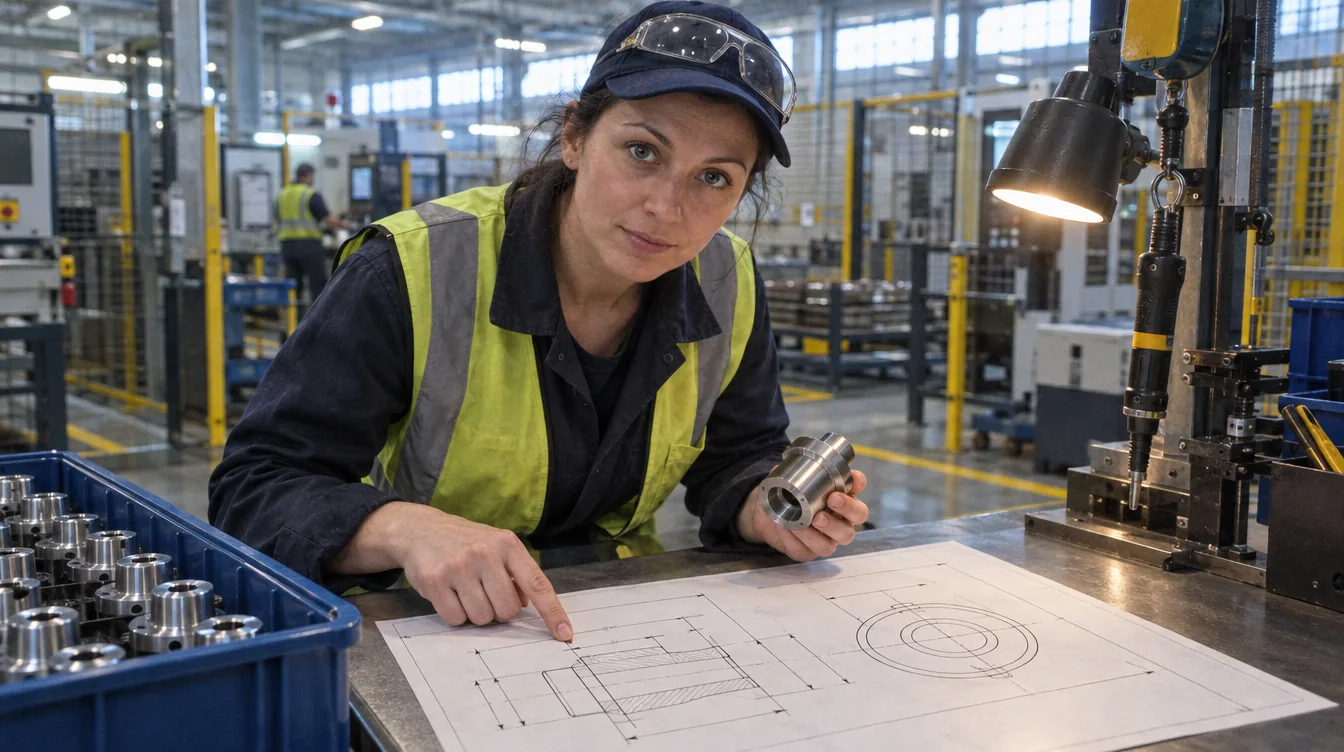
We take over the comparing and the updating, you keep the engineering decisions
Setting standards against delivery, tracking design changes, preparing document versions and collecting reports from the floor can be taken off the desk. What the process should look like is the engineer's decision.
- A discrepancy is visible before it becomes a problem. - An operation regularly performed outside the standard is a signal to the engineer, not a discovery during a complaint analysis.
- A design change has its reach identified. - Which routings, which workstations and which document versions it affects is visible as soon as it is raised.
- A report from the floor has somewhere to go. - An operator who can see the instruction does not match reality has one route for raising it instead of a conversation at the machine.
Scope
What can be taken off a manufacturing engineer
Twenty example tasks. Each one has a human approval point. Below is a selection, and the scope we fit to your technology.
Describing the process
- A draft routing based on a similar product (decision: the engineer)
- The operations, resources and tooling set out
- Checking the description is complete before approval
- Linking the routing to the design documentation
Standards and times
- Comparing the standard with the actual time taken
- Pointing out operations systematically performed outside the standard (assessment: the engineer)
- A signal about standards unchanged for years
- A proposed correction to a standard based on delivery (approval: the engineer)
Design changes
- Pointing out the routings a change affects
- The list of workstations where the old version is in force
- Judging the effect of a change on time and tooling (assessment: the engineer)
- Tracking the status of implementing a change
Supporting the floor
- One route for raising a discrepancy with the documentation
- Linking a report to the routing and the operation
- A summary of reports recurring at the same operation
- A reply to whoever raised it, with the engineer's decision
Improving the process
- A summary of the operations with the widest spread of times
- Pointing out the operations generating the most defects
- Comparing the same operation performed on different machines
- A register of improvements introduced, with their effect
A day's work
Today
- You learn about a gap between the routing and the floor by chance
- You compare standards with delivery once a year, if at all
- At a design change you look for what else needs correcting yourself
- You do not know which version of an instruction hangs at a workstation
- Operators' reports arrive verbally and get lost
- The operations with the widest spread of times are invisible to you
With AI assistance
- An operation performed outside the standard reports itself as a signal
- The standards are compared with delivery as you go
- A design change has its reach identified before the work starts
- You can see where the old version of a document is in force
- Reports from the floor go by one route and come back with an answer
- You have the operations with the widest spread summarised
- Documentation matching the floor
fewer places where practice has drifted from the description
a discrepancy has a route for being raised and is visible
- Current standards
planning rests on times from this decade
the standards are compared with delivery as you go
- Time to implement a change
a design change reaches the workstation sooner
the reach of a change is pointed out rather than searched for
- Spread of operation times
the operations with the widest spread are pointed out for a look
the spread is measured rather than guessed
We start with comparing standards against delivery, because it shows the scale of the drift fastest.
- Step 1
We set the standards against delivery
For the highest-volume operations. The result is usually enough for the conversation about standards to stop being an argument about impressions.
- Step 2
A route for raising things from the floor
One form for raising a discrepancy, linked to the routing and the operation.
- Step 3
The reach of design changes
Pointing out the routings and workstations a change affects, with implementation tracked.
- Step 4
Summaries for improvement
The spread of times, defects by operation. Last, because it needs data from the earlier steps.
Common questions
Questions that come up at the first meeting
Will the system change our standards by itself?
No. A proposed correction is an indication, the decision belongs to the engineer. Standards have consequences in costing, in settlement and sometimes in pay, so none of them can change without a conscious human approval.
Will a manufacturing engineer be replaced by a system?
The decision about what the process should look like is an engineering decision and it stays one. We take over comparing standards with delivery and tracking the reach of design changes - spreadsheet work that takes the engineer weeks. The effect is the opposite of the fear: the engineer spends more time at the machine, because they are not sitting over summaries.
Does this fall under the AI Act?
Describing a process is not a high-risk use. The point to watch is comparing how the same operation is performed by different people - we set the scope so that the comparison concerns machines, variants and process changes rather than the productivity of particular operators.
Still have a question that is not here? Book a call

Next step
When did you last compare the standards with actual delivery?
We will show you what a manufacturing engineer's work looks like when a gap between the document and the floor reports itself and a design change has its reach identified.