

Role
PMO
How do you know the portfolio picture you show the board matches what is happening in the projects? You assemble it from reports whose reliability depends on who wrote them.
Intro call
Four questions we would start with
How do you know a project status matches reality?
If the only source is the manager's report, the portfolio reflects optimism rather than the state of things.
How many times a month do you collect the same data from the same people?
Every collection round is a week of the cycle and a dozen or so reminders.
What do you do when a project report and the data from the system say different things?
Whether the discrepancy is explained, or whichever source is at hand before the steering committee wins.
Who notices first that two projects need the same person in the same month?
If nobody does until the clash, resource planning is happening after the fact.
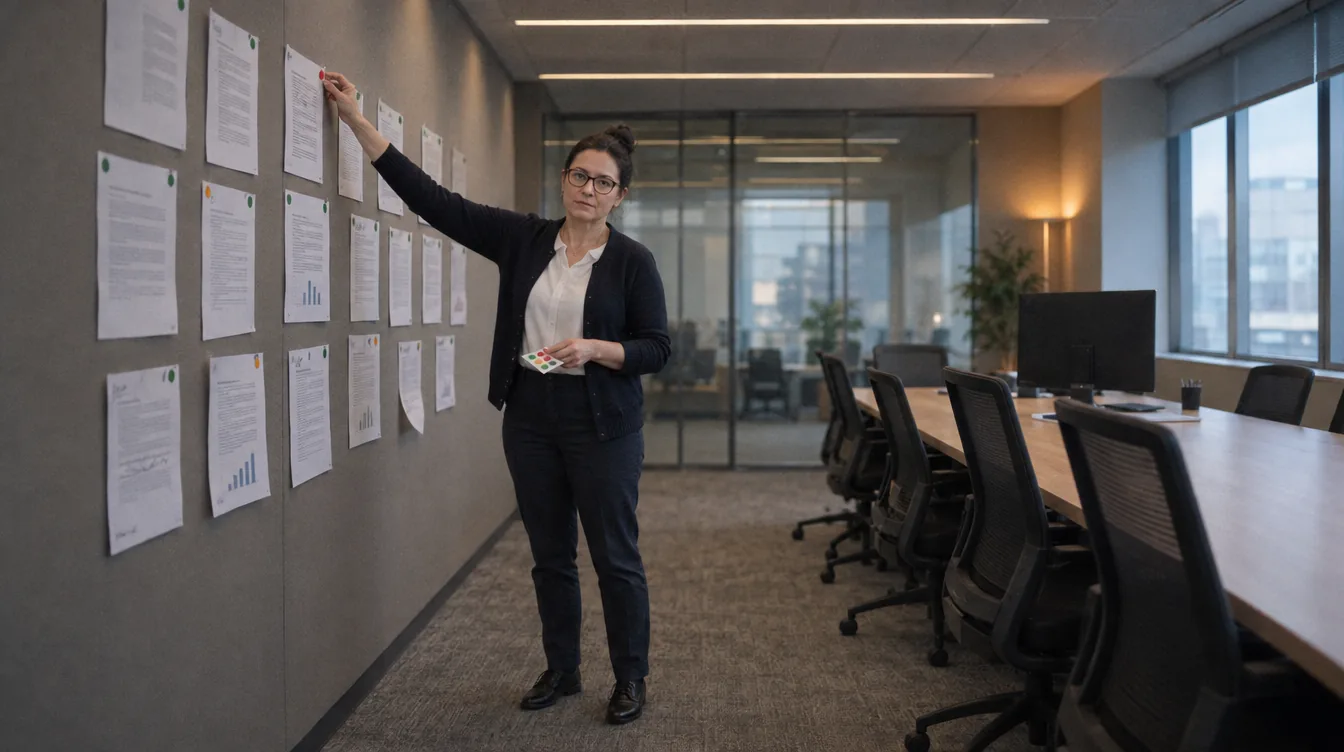
We take over the collecting and the assembling, you keep the judgement of the portfolio
Collecting statuses, watching the standards, detecting resource clashes and preparing reports can be taken off the desk. Reading the portfolio's situation and the recommendations for the board stay with a person.
- The status comes from the work, not from a request for a report. - Where projects are run in tools, the picture is built without a collection round.
- A divergence between sources is pointed out. - A green status beside tasks with no progress for three weeks is a signal for a conversation, not for acceptance.
- A resource clash is visible before the clash. - Two projects planning the same person in the same period report themselves at planning, not at an escalation.
Scope
What can be taken off a PMO
Nineteen example tasks. Each one has a human approval point. Below is a selection, and the scope we fit to your portfolio.
The project register
- A register of projects with stage, budget and sponsor
- Linking a project to an organisational goal
- A signal when a project has not been updated for longer than agreed
- Projects summarised by stage and value
Collecting statuses
- The status assembled from the tools the projects use
- A reminder about a status expected from a manager
- Pointing out divergences between the status and the data
- A summary of the changes since the previous period
Standards and templates
- The project document templates in one place
- Pointing out projects run outside the standard (assessment: the PMO)
- A checklist for starting and for closing a project
- A register of departures from the standard with the reasons
Resources across the portfolio
- Resource demand by project and period
- A signal when a person is planned in several projects at once
- Load against availability (decision: the steering committee)
- The effect of moving a project on the resources
The report for the board
- A draft portfolio report (content and conclusions: the PMO)
- Projects at risk, with the cause
- Plan against delivery by project
A day's work
Today
- You collect the statuses by email, reminding people several times
- You assemble the portfolio picture in a spreadsheet before every committee
- A divergence between a report and reality surfaces by chance
- A resource clash emerges when two managers ask for the same person
- Departures from the standard surface at project closure
- You assemble the board report over several days
With AI assistance
- The status comes from the tools, where the projects live in them
- The portfolio picture is current rather than reconstructed before the committee
- A divergence between the status and the data is pointed out
- A resource clash is visible at planning, not at an escalation
- A project outside the standard is flagged early
- The report has a draft, you supply the conclusions
- A portfolio picture you can rely on
the board looks at the state of things rather than at a sum of optimism
divergences between sources are pointed out
- Time to assemble a report
the PMO analyses the portfolio instead of collecting it
the status comes from the tools rather than from requests
- Visible resource clashes
fewer projects starting with no people available
load against availability is visible
- Projects run consistently
fewer projects run entirely their own way
departures from the standard are flagged
We start with the statuses, because collecting them takes the most time and gives the least certainty.
- Step 1
Status from the project tools
Where projects live in systems, the picture is built without a collection round.
- Step 2
Detecting divergences
A green status beside no progress, and other signals of inconsistency.
- Step 3
Resources across the portfolio
Demand against availability and clashes between projects.
- Step 4
The portfolio report
A draft report with the risks summarised. Last, because it needs data you can rely on.
Common questions
Questions that come up at the first meeting
How is this different from a project manager?
The manager is accountable for one project and for delivering it. The PMO is accountable for the picture of the whole, for the standard and for projects not competing for the same resources without anybody knowing. Those are two different vantage points and two different kinds of pressure.
Can a PMO be run by fewer people?
A PMO is usually one or two people serving a dozen or so projects - the problem is not the headcount, it is that the status collection cycle eats the whole month. Taking that over does not shrink the team; it gives it time for what it was created for, which is looking at the portfolio rather than writing it down.
Does this fall under the AI Act?
Running a project portfolio is not a high-risk use. The line runs at data about people's workload: we plan resources at the level of roles and availability, without building productivity assessments of individuals.
Still have a question that is not here? Book a call

Next step
How many days does preparing the portfolio picture before a committee take?
We will show you what PMO work looks like when the status comes from the tools and a resource clash is visible before the escalation.