

Role
Supply planning
Who notices first that a material will run out in three days? If it is production, it is already too late for a delivery through the normal route. This role consists of watching hundreds of items, any of which can bring things to a halt.
Intro call
Four questions we would start with
Who notices an approaching shortage first?
If it is a person going through a report, they will catch the items they have time to look at. The rare, cheap items drop out of view - and they are the ones that most often stop production.
How quickly do you find out that a delivery will be late?
With most suppliers - when it does not arrive. A confirmed date is sometimes the only information, and between the confirmation and the delivery come several weeks of silence.
How many times a month do you order on an urgent basis?
Every urgent order is a surcharge and somebody's overtime. The number of such orders is the most honest measure of planning quality - and hardly anybody counts it.
What do you drop first when time runs short?
Usually the review of excess and dead stock - the only work that actually releases money. Shortages shout, excess is silent.
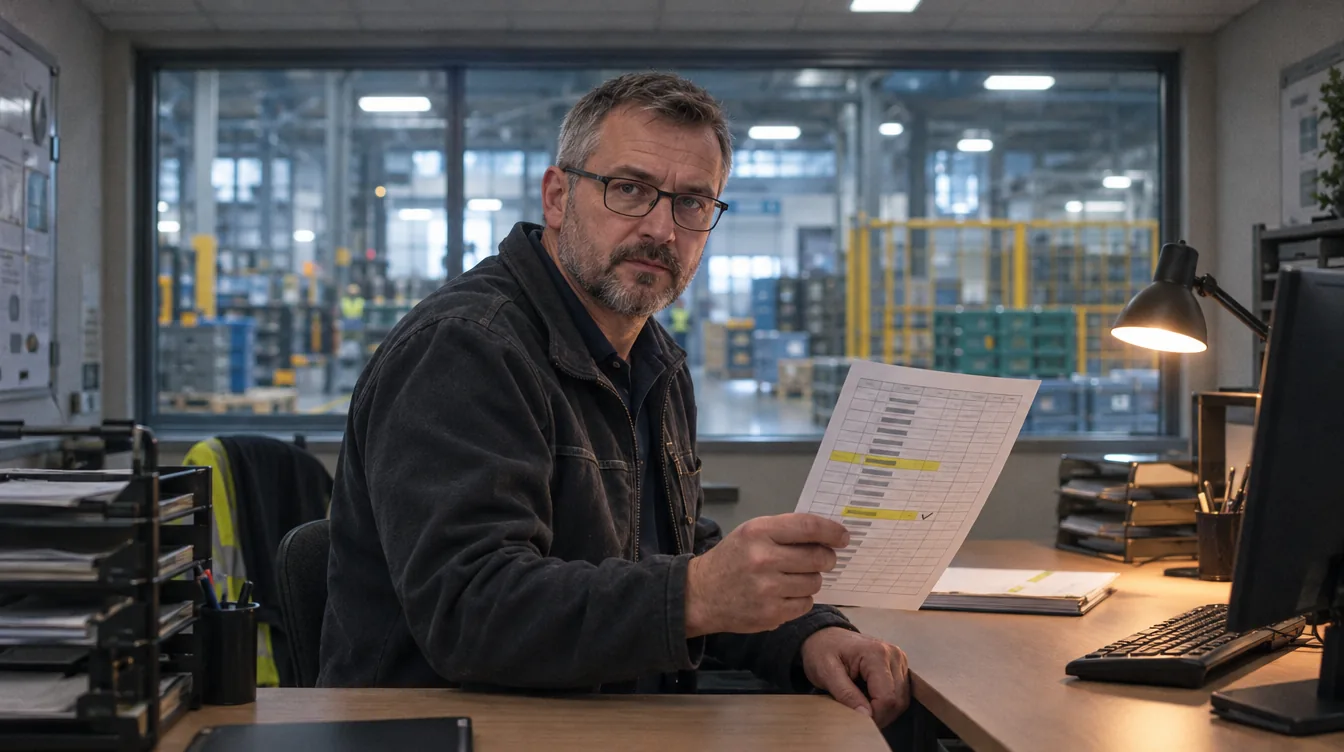
We take over the watching, you keep the decisions about stock
Monitoring levels, calculating replenishment needs, tracking confirmations and catching dead stock can be taken off the desk. Decisions about stock levels and the response to a disruption stay with a person.
- An order does not go out by itself. - The system prepares a proposal under the agreed parameters, and the specialist approves it. For routine items that is seconds, for unusual ones it is normal work.
- Stock parameters are a decision, not a calculation. - The safety level depends on how much you fear a stoppage - and that is a business decision, not a statistical one.
- Excess is shown as loudly as a shortage. - It is the only way dead stock stops growing unnoticed.
Scope
What can be taken off supply planning
Twenty example tasks. Each one has a human approval point. Below is a selection, and the scope we fit to your process.
Replenishment signals
- Monitoring levels against minimums for every item
- Calculating the need, accounting for orders in transit and reservations
- A signal about an item at risk, far enough ahead to cover the lead time and leave room for a decision
- Pointing out items whose consumption clearly departs from history (assessment: the specialist)
- A list of items with no movement that are still held in stock
Stock parameters
- Proposed minimum levels based on consumption and lead time (decision: the specialist)
- Pointing out parameters set long ago and never verified
- Calculating the effect of changing the safety level
- Marking the items critical to production continuity
- Seasonality of consumption for the items where it occurs
Replenishment orders
- A proposed order under the parameters (approved by: the specialist)
- Grouping orders to one supplier
- Checking logistical minimums and pack multiples
- Pointing out items covered by a contract and the terms available
Delays and dead stock
- Checking delivery confirmations and detecting a missing one
- A signal about a delivery at risk against the production plan
- Suppliers systematically running late, set out
- A list of excess stock with its value and age
- Pointing out items to sell off or write down (decision: the specialist)
- The history of urgent orders together with the reason
A day's work
Today
- The morning is a stock report and going through the items you have time for
- You learn about a late delivery when it does not arrive
- The minimum levels were set once and nobody has verified them
- You place urgent orders regularly and nobody counts them
- You discover dead stock at the annual count
- When the production plan changes you recalculate the needs by hand
With AI assistance
- The items at risk are reported and waiting, with time to decide before the order date
- A missing delivery confirmation is a signal rather than silence
- The parameters have a review date and a proposed update
- The number of urgent orders is visible together with the reasons
- Dead stock is on a list, with its value and age
- A change of plan recalculates the needs, and you look at the effects
- Material availability
fewer stoppages caused by a cheap, rare item
the monitoring covers every item, not those there is time for
- Stock level
less capital tied up for no reason
excess is shown as loudly as a shortage
- Warning before a delivery
a risk is known before a delivery fails to arrive
a missing confirmation is a signal rather than a normal state
- Visible dead stock
items with no movement do not sit for years
the list is built as you go, not at the annual count
We start with the critical items, not with the whole material index.
- Step 1
We identify the critical items
The ones whose absence stops production. There are usually a few dozen of them rather than a few thousand - and they get the monitoring first.
- Step 2
Monitoring and signals
Levels against the minimums, far enough ahead to cover the lead time and leave room to talk to the supplier. It works straight away and asks nothing of other departments.
- Step 3
Stock parameters
A review of the minimum levels for the critical items. Only with a history of signals can they sensibly be discussed.
- Step 4
Dead stock and urgent orders
Lists and statistics. This stage gives the most arguments in a conversation with the board about working capital.
Common questions
Questions that come up at the first meeting
Will a supply planner still be needed?
They will, because the decision whether to order early or to take the risk does not follow from a calculation - it follows from knowing the supplier and the situation. We take over the calculating and the flagging, the work done today in a spreadsheet. A planner who is not recalculating by hand keeps more items in view and less often hears about a problem late.
Does this fall under the AI Act?
Stock planning is not a high-risk use, and the transparency requirements in the AI Act concern something else - conversations with a bot and generated content, not internal planning. The one real obligation here is the same as with every rollout: AI literacy among the people using the system. We built human oversight of an order into the design not because a regulation forces it, but because otherwise it does not work.
Still have a question that is not here? Book a call

Next step
How many urgent orders did you place last month and what did they cost you?
We will show you what supply planning looks like when an item at risk reports itself and excess is as visible as a shortage.