

Role
Dock scheduling
How quickly do you find out that a driver will not make their slot? If it is only when they have not arrived, the whole day at the dock arranges itself, and rarely well.
Intro call
Four questions we would start with
How quickly do you find out a driver is running late?
An hour ahead lets you move the queue. A delay established at the moment of the slot means the dock stands empty while a queue forms behind it.
When is the decision made to accept a delivery outside its slot?
At the gate or earlier, and whether anyone can see how it affects the remaining slots that day.
Who sets the order when three vehicles are waiting for two docks?
If it is security or the shift supervisor at the gate, the decision is made with no knowledge of the rest of the day.
What happens when the booking does not match the contents of the delivery?
Whether the warehouse knows about it before unloading or during it.
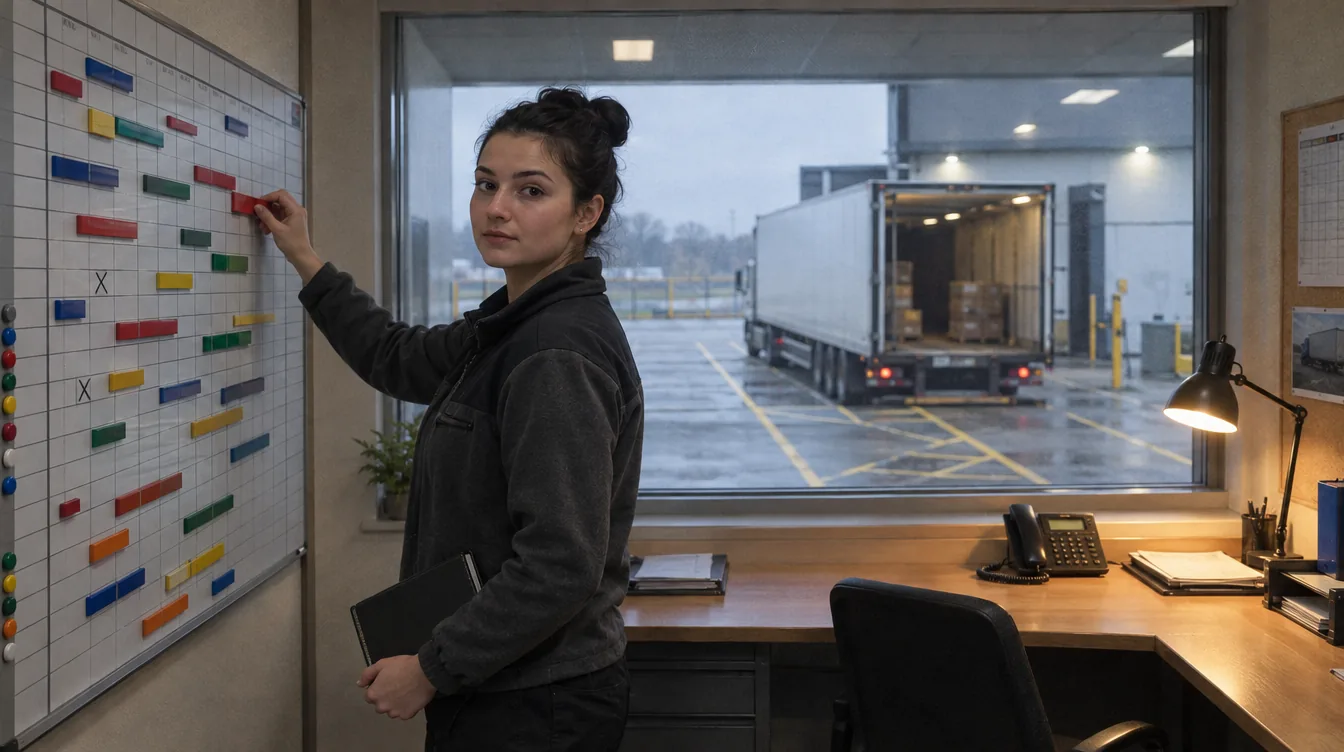
We take over the arranging and the notifying, you keep the decisions at the dock
Taking in bookings, arranging slots, notifying drivers and carriers and recording how it went can be taken off the desk. Decisions about order and about exceptions stay with the specialist.
- Bookings come in by one route. - The carrier books a slot themselves, from the times available, instead of calling the warehouse.
- A delay changes the day's plan, not just one slot. - A reported delay recalculates the queue and proposes a move, and the specialist approves it.
- The driver knows when to come in. - Information about a change reaches them before they are standing at the gate.
Scope
What can be taken off dock scheduling
Twenty example tasks. Each one has a human approval point. Below is a selection, and the scope we fit to your infrastructure.
Taking in bookings
- A slot booked by the carrier from the times available
- The delivery details required at booking
- Confirmation of the booking to the carrier and the driver
- A signal when a delivery arrives with no booking
- Checking the booking against the order
The arrangement of time slots
- A proposed layout of slots by delivery type and unloading time
- A reserve for urgent deliveries (decision: the specialist)
- A signal when a dock is overloaded in a particular hour
- The slot layout against the warehouse staffing available
Changes and delays
- A delay reported by the carrier
- Recalculating the queue after a reported delay
- A proposed new slot (approval: the specialist)
- A register of slot changes with the reason
Communication with drivers
- Confirmation and a reminder about the slot
- Information about a change of slot
- Entry instructions and where to report
- A notification that the dock is ready
Dock throughput
- Recording entry, unloading and departure times
- Waiting times summarised by carrier and by hour
- Pointing out the busiest hours
A day's work
Today
- Bookings arrive by phone and email, to several people
- You arrange the slots in a spreadsheet and send it round
- You find out about a delay when the vehicle has not arrived
- The order at the gate is set by security or the shift supervisor
- A driver waits because nobody told them about a change
- You do not know how much time vehicles spent waiting in total
With AI assistance
- The carrier books a slot themselves, from the times available
- The slot layout is proposed by delivery type and staffing
- A delay reported in advance recalculates the queue
- The order at the gate follows the plan, not who turned up
- The driver is told about a change before they arrive
- Waiting time is recorded and summarised
- Driver waiting time
fewer vehicles standing at the gate with no information
the slot and any changes reach the driver
- Use of the docks
fewer empty docks next to overloaded ones
the layout accounts for delivery type and staffing
- A predictable day
the warehouse knows in the morning what the day looks like
bookings and changes are in one view
- Idle time at the dock
fewer gaps between deliveries
a delay recalculates the queue instead of blocking the slot
We start with one route for booking, because without it the day has no plan.
- Step 1
Slots booked by the carrier
One route with the required details, instead of a phone call to the warehouse.
- Step 2
Slot layout and overload signals
A proposed layout by delivery type, unloading time and staffing.
- Step 3
Reporting delays and notifications
Recalculating the queue and telling the driver before they arrive.
- Step 4
Measuring throughput
Entry, unloading and waiting times. Last, because it needs the recording to be working.
Common questions
Questions that come up at the first meeting
What about deliveries that arrive unannounced?
They stay, and that is why the layout keeps a reserve for them. The difference is that an unbooked delivery is visible as an exception with a cost for the rest of the day, rather than as a neutral event.
Will dock scheduling need a person of its own?
In many companies the warehouse does the scheduling on the side, and that is where the chaos at the docks comes from. Taking over the bookings and the notifications does not remove the role - more often it makes it possible to keep it at all, because it stops depending on answering the phone all day. What is left is arranging the day and the decisions at the exceptions.
Does this fall under the AI Act?
Dock scheduling is not a high-risk use. We record vehicle and carrier times; driver data we keep to what is necessary for entry and contact, without building assessments of individual people out of it.
Still have a question that is not here? Book a call

Next step
How long did vehicles wait at your docks yesterday in total?
We will show you what dock scheduling looks like when the carrier books the slot themselves and a delay recalculates the queue before the driver arrives.