

Role
Patient coordinator
Which kind of matter comes back most often in calls to reception? If it is booking, rescheduling and questions about how to prepare for a visit, then most calls do not need a person - and the person is needed elsewhere.
Intro call
Four questions we would start with
Which kind of matter repeats most often in the calls?
Usually three: booking, rescheduling and questions about preparation. Together they are often most of the traffic.
How quickly do you find out that a patient will not come?
If it is at the time of the appointment, the slot is lost entirely. If it is the day before, it can usually be given to somebody else.
How many times does a patient call before getting through?
If it is several, the first impression of your clinic is formed before anyone there picks up.
Who decides that a matter is urgent?
That answer has to be: a person with medical qualifications. Everything else is arranging an appointment, not assessing a condition.
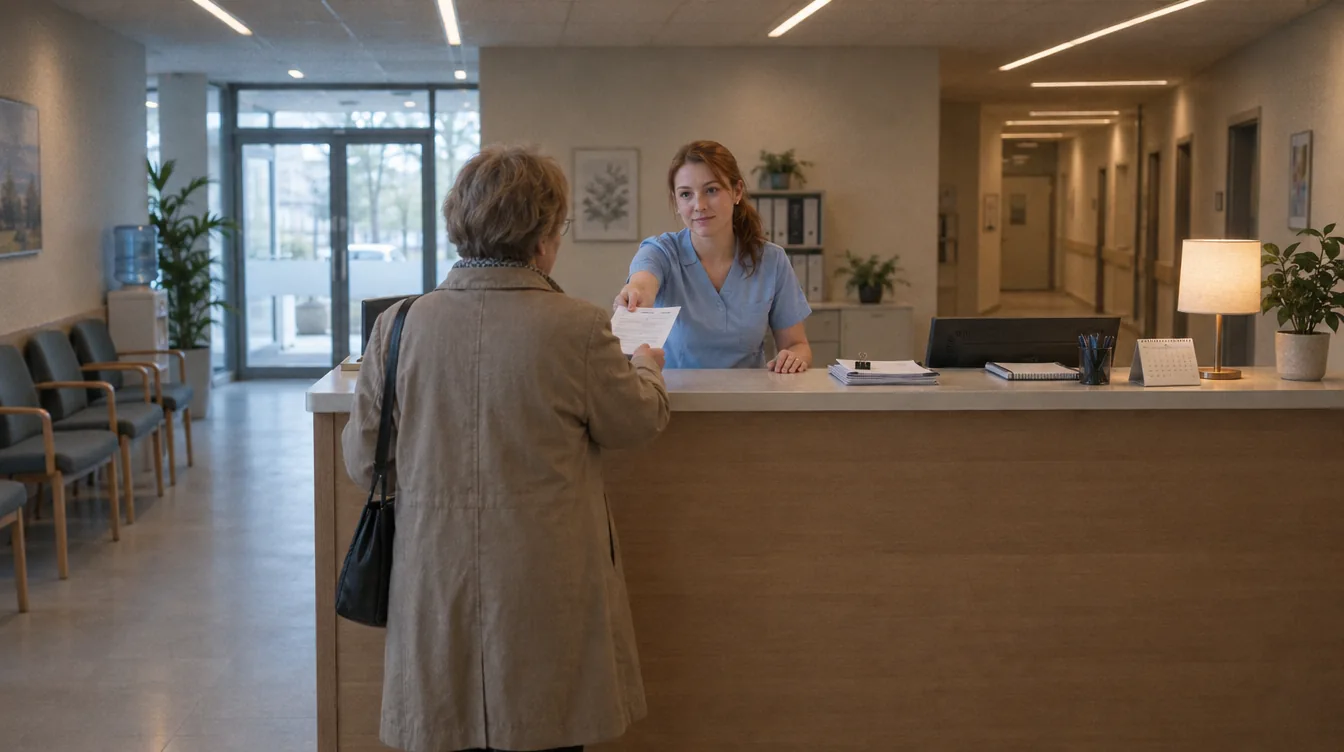
We take over the appointments, you keep the medical decisions and the conversation
Booking and rescheduling visits, reminders, assembling documents and coordinating the next steps can be taken off the desk. Judging urgency and every medical decision stay with the clinical staff.
- Booking and rescheduling need not require a phone call. - A patient who wants to move an appointment should not be waiting in a queue on the line.
- A cancelled slot goes back into the pool. - The freed slot is offered to patients waiting for an earlier date instead of being lost. We are talking about private appointments here - with publicly funded care the order follows from the admissions schedule and we do not work around that.
- Urgency is set by the clinical staff. - Always. The tool organises appointments and collects information - it does not assess health and does not set the order for medical reasons.
Scope
What can be taken off reception and patient coordination
Nineteen example tasks. Each one has a human approval point. Below is a selection, and the scope we fit to your clinic.
Booking visits
- Booking a visit in the available slots without a phone call
- Confirmation of the appointment together with the location
- A waiting list for an earlier slot
- Offering a freed slot to people on the list
- Routing matters that need a conversation to reception
Preparing the patient
- Preparation instructions from a library approved by the clinic (content: clinical staff)
- The list of documents the patient should bring
- A reminder before the visit with the option to cancel
- Answers to organisational questions (oversight: the coordinator)
Changes and cancellations
- Rescheduling a visit without reception's involvement
- Releasing the slot for reuse
- Notice when the clinic cancels a visit
- Non-attendance summarised by type of visit
Documents and consents
- Assembling the documents before the visit
- Pointing out missing consents and declarations
- Confirming completeness before the patient is admitted
Coordinating the pathway
- The next steps arising from the referral (the referral: the doctor)
- A reminder about a test or a follow-up visit
- Pointing out patients with no next step booked
A day's work
Today
- Most calls are about booking or moving an appointment
- Patients cannot get through at peak hours
- A cancelled slot is lost, because nobody has time to offer it
- You give preparation instructions over and over, by phone
- Missing consents surface when the patient is admitted
- You do not know which visits have the highest non-attendance
With AI assistance
- Booking and rescheduling happen without a queue on the line
- Reception has time for the matters that need a conversation
- A freed slot reaches the people on the waiting list
- The preparation instructions go out with the confirmation
- Missing documents and consents are pointed out before the visit
- You have non-attendance summarised by type of visit
- Time to reach you
fewer patients who failed to get through
routine matters do not need the phone line
- Use of appointment slots
fewer slots lost with no patient
a freed slot reaches the waiting list
- Non-attendance
fewer visits nobody came to
a reminder with an easy cancellation goes out before the visit
- Documents complete before the visit
fewer visits delayed by a missing consent
the gaps are pointed out earlier
We start with booking and rescheduling, because they are what occupies the phone line.
- Step 1
Booking and rescheduling without a phone call
Available slots, confirmation, the option to change.
- Step 2
Reminders and the waiting list
A reminder before the visit and freed slots put to use.
- Step 3
Preparation and documents
Preparation instructions, missing consents pointed out.
- Step 4
Coordinating the next steps
Reminders about tests and follow-up visits arising from referrals. Last, because it needs the pathway to be in order.
Common questions
Questions that come up at the first meeting
What about older patients who do not use an app?
For them the phone stays and that does not change. They usually come out ahead: if half the traffic leaves the line, the waiting time for the rest falls noticeably. A project that makes this worse has been done badly.
Will reception need fewer people?
Patients who want to speak to a person have to be able to - that is a condition, not an option, and we write about it below. The aim is not to take people off the line but to take off it the matters where the patient cares about speed rather than about a conversation. Then the person who wants to talk gets through sooner. If the project makes this worse, it has been done badly.
Does this fall under the AI Act?
The scope described here concerns private appointments - with publicly funded care there are additional rules on keeping the admissions schedule, the case category and recording changes of date, and that is a separate conversation. Arranging visits is not in itself a high-risk use, but healthcare is an area where the line is close: systems setting urgency or order for medical reasons are treated differently and have to meet additional requirements. That is why the scope we propose deliberately does not cover them.
Still have a question that is not here? Book a call

Next step
How many slots were lost last month with no patient?
We will show you what reception looks like when rescheduling needs no phone call and a freed slot reaches the waiting list.