

Role
Quantity surveying
How long does preparing an estimate for one tender take? That number decides how many bids you are able to submit - and that usually decides your order book.
Intro call
Four questions we would start with
How long does preparing one estimate take?
And how much of that time is reading the documents and retyping the bill of quantities, and how much is the actual calculation.
What do you not know about a job until you have read the whole set of documents?
Usually: where the description and the drawings disagree, and what the bill of quantities leaves out.
How do you know the prices in the estimate match today's market?
If they come from a price list six months old, the estimate describes the past and you carry the risk.
When is the decision to bid made?
If it is after the estimate is prepared, you also prepare the ones that were not worth pricing.
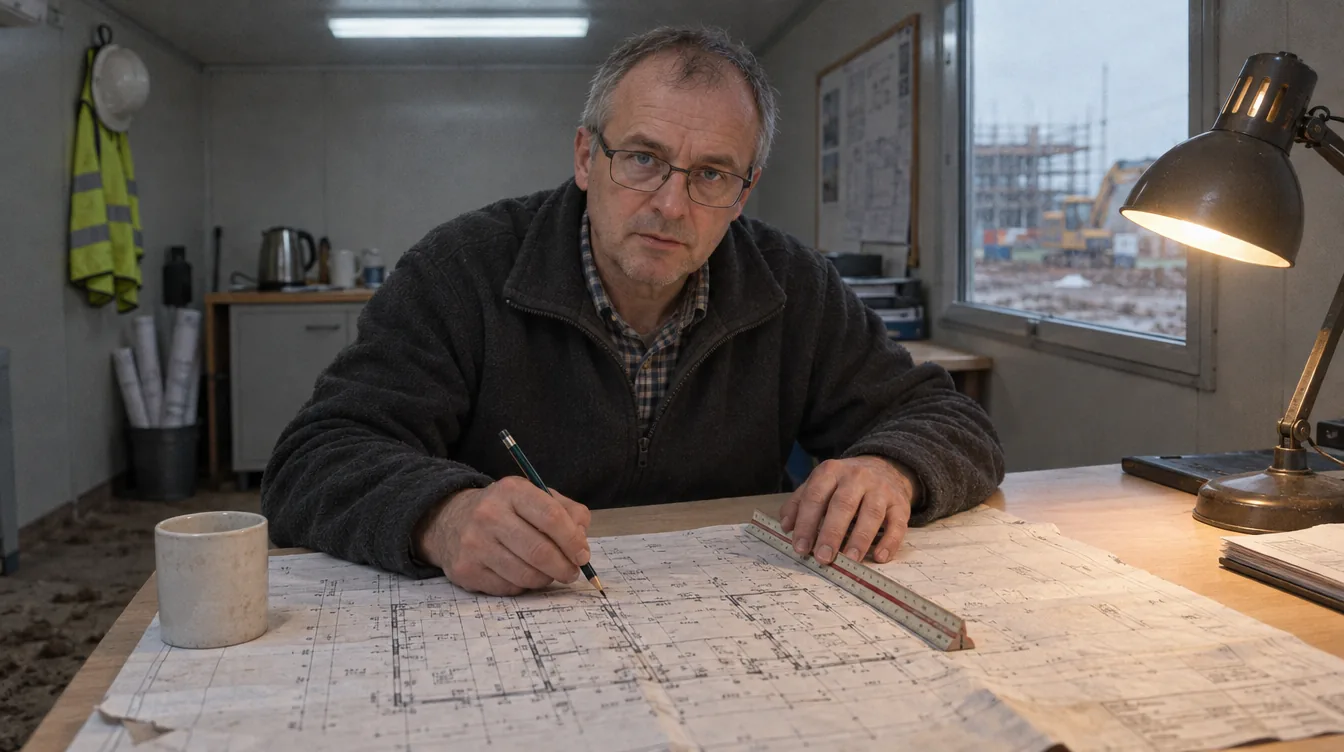
We take over the reading and the calculating, you keep the judgement of risk
Analysing the documents, preparing the bill of quantities, updating prices and comparing with the outturn can be taken off the desk. Judging the risk and deciding the price stay with the surveyor.
- The documents arrive already read. - Disagreements between the description and the drawings, and unusual items, are pointed out before the surveyor starts calculating.
- The prices match the market. - Materials and labour compared against current data, not against a price list from last season.
- What was learned on completed jobs comes back into the estimate. - Items that systematically cost more than assumed are pointed out at the next estimate.
Scope
What can be taken off estimating
Twenty-one example tasks. Each one has a human approval point. Below is a selection, and the scope we fit to your specialism.
Analysing the documents
- The scope set out from the tender documents
- Pointing out disagreements between the description and the drawings
- Pulling out the contract terms that affect the price
- A signal when a clause shifts risk onto the contractor (assessment: the surveyor)
- An initial view on whether bidding is worthwhile (recommendation: the surveyor, decision: the board or the commercial director)
The bill of quantities
- The items set out from the documents
- Pointing out items that are missing or unclear
- A comparison of the bill with a similar job
- Linking items to the cost standards catalogue
- Comparing the bill with the as-built measurement after completion
Material and labour prices
- Current material prices from the sources you hold
- Labour rates by type of work
- A signal when an item's price is highly volatile
- The share of materials in the value of the job
The estimate and its variants
- The calculation under the agreed method (decision: the surveyor)
- Variants under different risk assumptions
- Pointing out the items with the largest effect on the result
- The documents needed to submit the bid
Comparison with the outturn
- The estimate set against the final account
- Pointing out items systematically underestimated
- Lessons carried into later estimates (approval: the surveyor)
A day's work
Today
- You read the documents in full, looking for disagreements
- You retype and complete the bill of quantities by hand
- You update material prices periodically, for some of the items
- You decide whether to bid after the estimate is prepared
- You do not know which items were underestimated on previous jobs
- You calculate variants from scratch for every assumption
With AI assistance
- Disagreements in the documents are pointed out before you calculate
- The bill of quantities is set out, you verify and complete it
- Material prices are current against the sources available
- An initial view on viability comes before the full estimate
- Items systematically underestimated are pointed out
- Variants recalculate without starting from zero
- Time to prepare an estimate
fewer days on reading and retyping
the documents and the bill arrive set out
- Accuracy of the estimate
fewer items systematically underestimated
lessons from completed jobs come back into the estimate
- Tenders priced
more bids submitted by the same team
preparing one estimate takes less time
- Knowledge from completed jobs
the experience does not stay in one head
the comparison of estimate with outturn is recorded
We start with analysing the documents, because that is where most time goes with no calculating.
- Step 1
The scope and the disagreements
The scope from the documents, description against drawings, the contract terms that affect the price.
- Step 2
The bill of quantities
The items set out from the documents, gaps and ambiguities pointed out.
- Step 3
Prices and variants
Current material prices, variants under different risk assumptions.
- Step 4
Comparison with the outturn
The estimate against the final account. Last, because it needs completed contracts.
Common questions
Questions that come up at the first meeting
How is this different from a site manager?
The surveyor works before the contract and is accountable for whether the price is covered. The site manager works during it and is accountable for whether it can be delivered. Comparing the estimate with the final account is where these two roles should meet - and usually do not.
Will estimating need fewer surveyors?
In most construction companies the number of bids submitted is limited not by appetite but by how many estimates the team manages to prepare. Taking over the analysis of documents and the bill of quantities translates into the number of tenders you enter at all. Judging risk and deciding the price stay with the surveyor, and that is the part they finally have time for.
Does this fall under the AI Act?
Estimating is not a high-risk use. The data concerns the scope of works, materials and rates rather than people, so the obligations come down to ordinary care in verifying the results before the bid goes in.
Still have a question that is not here? Book a call

Next step
How many tenders did you drop last year for lack of time to price them?
We will show you what estimating looks like when the documents arrive analysed and lessons from completed jobs come back into the estimate.