

Role
Returns
How many people touch one return before the client gets their money? The report, the warehouse, the condition check, accounting - and the client counts the days from the moment they sent the parcel back.
Intro call
Four questions we would start with
How many people touch one return?
Every handover lengthens the time and multiplies the places a return can get stuck. The client sees one number: days until the refund.
How long is the road from a withdrawal notice to the money being returned?
If it is longer than a week, you generate enquiries about the status of the return - a second wave of work caused by the first.
Where does the information about why the client returned the goods go?
If it goes into a field nobody reads, you lose the cheapest information you have about the quality of your descriptions, your products and your delivery process.
Which reason for return comes up most often?
If the team cannot answer, returns are handled as a cost instead of being material for removing the cause.
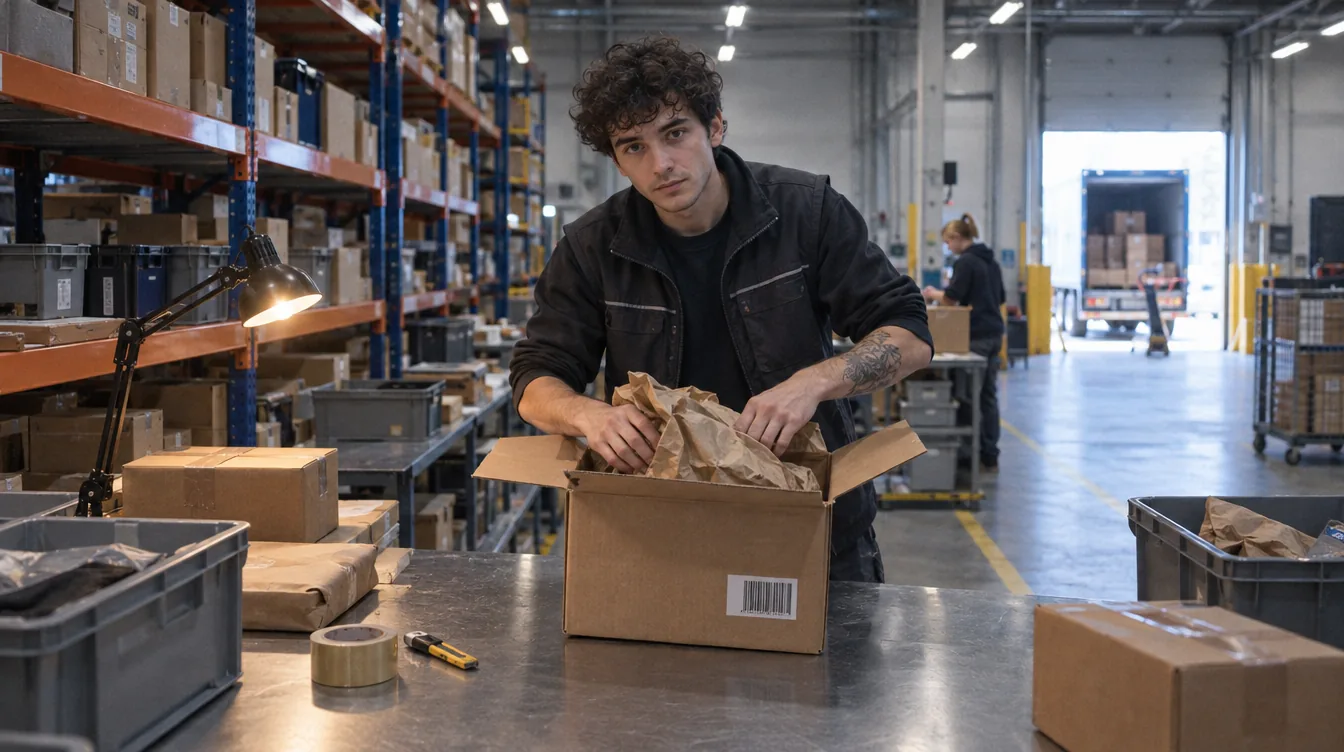
We take over the handling, you keep the decisions in contested cases
Registering a return, checking the entitlement, moving it through the stages and communicating with the client can be taken off the desk. The decisions in contested cases and judging the condition of the goods stay with a person.
- A contested case goes to a person. - A return after the deadline, a suspicion of abuse, signs of use going beyond checking the goods - and that last one does not remove the right of withdrawal, it may only justify reducing the amount. Those cases the system flags and does not settle.
- Consumer rights are a condition, not a parameter. - The rules of withdrawal follow from the regulations and apply however you arrange the process.
- The reason for a return is collected in order to do something with it. - The summary of reasons goes to product and to content, not only into a statistic.
Scope
What can be taken off returns handling
Eighteen example tasks. Each one has a human approval point. Below is a selection, and the scope we fit to your process.
The return request
- Taking in the request with the order details
- Checking the deadline and the entitlement to return
- Generating the return label and the instructions
- A confirmation with the next steps
- Detecting a request about a return already registered
Checking and receiving the goods
- Linking the received parcel to the request
- A checklist for judging the condition of the goods (judgement: the warehouse operator)
- Flagging contested cases (decision: the specialist)
- Pointing out an unusually high pattern of returns (assessment: the specialist)
Settlement
- Preparing the refund (approved by: the specialist)
- Watching the deadline for returning the money
- The credit documents
- Information to the client at every stage
- Handling partial returns and exchanges
Cause analysis
- Grouping the reasons for return (assessment: the specialist)
- Pointing out the products with the highest share of returns
- Linking returns to the product description or the photographs
- The cost of handling returns, set out
A day's work
Today
- Return requests arrive by email and need checking by hand
- You link the parcel to the request by searching on the order number
- The client calls asking about the status, because they have heard nothing
- At a contested case you ask your manager and wait
- The reasons for return sit in the system and nobody reads them
- You watch the refund deadline from memory
With AI assistance
- The request comes in with the entitlement checked and the label ready
- A received parcel links itself to the request
- The client is told at every stage, so they do not call
- A contested case is flagged and reaches you with the full picture
- The reasons for return add up to a summary for product
- The refund deadline is watched by the system
- Time to refund
the client gets their transfer sooner
the stages stop waiting for a manual link
- The cost of handling a return
fewer contacts about status
the client is kept informed, so they do not ask
- Consistent decisions
similar cases end similarly
the contested ones reach a person with the history of similar ones
- Knowing the causes
returns fall at the source
the reasons are grouped and reach product
We start with the communication to the client, because that is where the effect is fastest.
- Step 1
Status information
The client finds out what is happening with their return. The number of contacts about status falls straight away.
- Step 2
Registration and checking the entitlement
An automatic check of the deadline and the conditions, with contested cases flagged.
- Step 3
Linking the parcel and settling
Matching receipts to requests and watching the refund deadline.
- Step 4
Cause analysis
Grouping the reasons and summaries for product. It needs a few months of data.
Common questions
Questions that come up at the first meeting
Will handling returns need fewer people?
Returns grow along with sales and that is usually the reason for this conversation - the team cannot keep up, and adding people to retype forms pleases nobody. Taking over the handling of requests does not change who decides the contested cases; it changes how many are left to settle once the obvious ones are subtracted.
Does this fall under the AI Act?
Handling returns is not a high-risk use. Automatically refusing a consumer's return would be a decision with legal effects for an individual - which is why a refusal always needs a person. Separately, it is worth watching the flagging of return patterns: a flag is a signal to check, not the assignment of any status to a client, and it must not by itself affect how their later requests are handled.
Still have a question that is not here? Book a call

Next step
How many days pass between a return arriving and the transfer?
We will show you what handling returns looks like when the client is informed at every stage and contested cases reach a person with the full picture.