

Role
Licences and IT assets
How do you know you only pay for the licences somebody uses? In most companies the answer is the same: from the invoice, once a year, at renewal.
Intro call
Four questions we would start with
How do you know you only pay for licences in use?
If you do not know how many accounts have not logged in for six months, you are paying for those too.
How many times a year do you renew a licence without negotiating?
A renewal in the last week of the term is an extension of the terms, not a conversation about them.
What do you not do, even though you know you should?
Usually: you do not check licence compliance and you do not reclaim licences after people leave.
Who buys software in your company?
If every department does it separately, on a company card, the licence inventory does not exist by design.
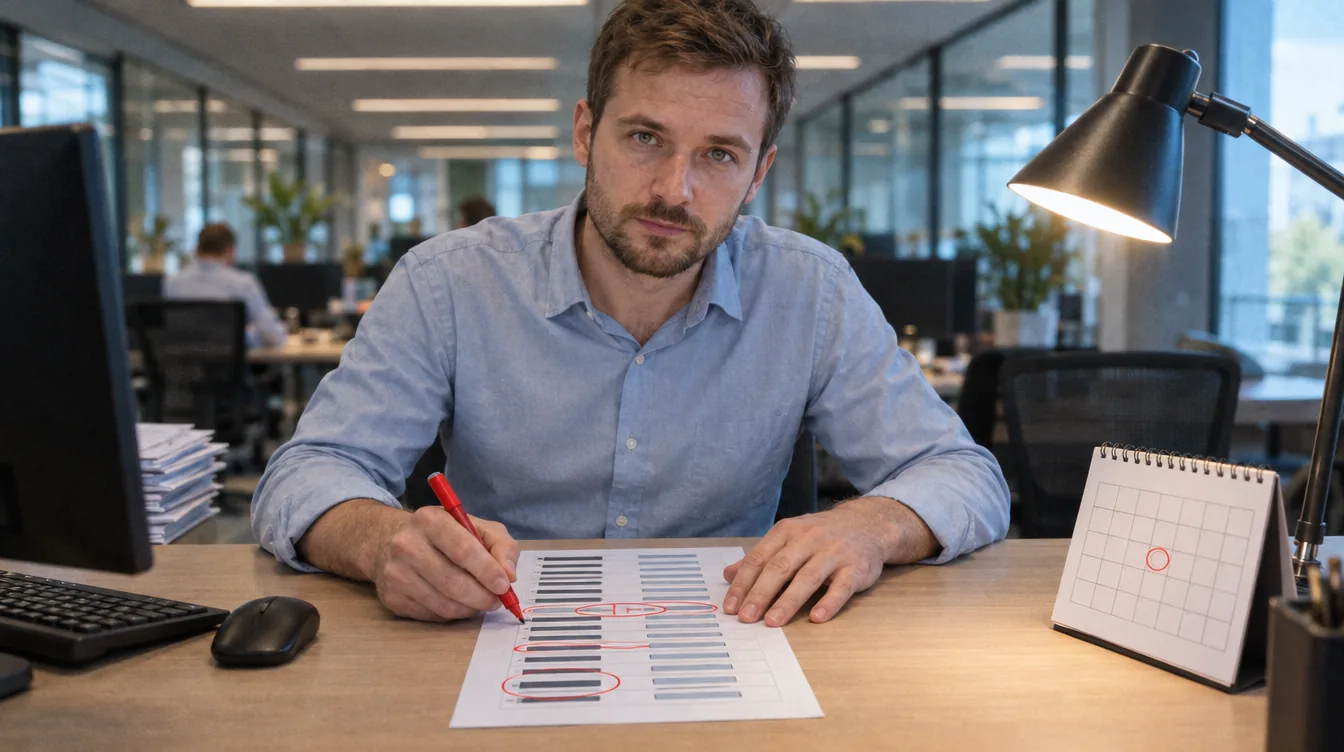
We take over the inventory and the watching, you keep the purchasing decisions
Keeping the inventory, summarising usage, watching dates and preparing the negotiation material can be taken off the desk. Deciding what to buy and what to drop stays with a person.
- The inventory is built from the systems in use. - Accounts, assignments and activity, not a spreadsheet filled in once a year by the departments.
- An unused licence is visible. - An account with no login for months is pointed out before the renewal, not after.
- A renewal starts in advance. - With usage data, so the conversation with the supplier is about the number rather than about extending.
Scope
What can be taken off licence management
Nineteen example tasks. Each one has a human approval point. Below is a selection, and the scope we fit to your software portfolio.
The licence inventory
- A register of licences with the type, the number and the term
- Linking a licence to a contract and a supplier
- Detecting software bought outside IT
- A signal when a licence has no contract assigned
Usage and assignments
- Licences assigned to people and departments
- Pointing out accounts with no activity in a given period
- Usage against the number of seats bought
- A signal when a licence was not reclaimed after an employee left
- A proposal to release a licence (decision: the specialist)
Renewals and negotiations
- A renewal calendar with advance notice
- Usage material for the conversation with the supplier
- A comparison of licensing options (decision: the specialist)
- The history of prices and terms from previous periods
Licence compliance
- Comparing the number of installations with the number of licences
- Pointing out use inconsistent with the licence type (assessment: the specialist)
- Documentation for a vendor audit
Costs and optimisation
- Licence cost by department
- A summary of tools with overlapping functions
- The change in cost against the previous period
A day's work
Today
- You keep the licence inventory in a spreadsheet, updated irregularly
- You learn about a department's purchase from the invoice
- You do not know which accounts have not been used for months
- The renewal arrives a week before the term ends
- Licences stay unreclaimed after an employee leaves
- At a vendor audit you count installations by hand
With AI assistance
- The inventory is built from the systems, not from a spreadsheet
- Software bought outside IT is detected
- Accounts with no activity are pointed out before the renewal
- The renewal date is flagged in advance
- An employee leaving releases the licence
- The number of installations against licences is compared as you go
- Licence usage
fewer seats paid for and not used
a lack of activity is visible before the renewal
- Compliance risk
fewer installations outside the licence scope
the number of installations is compared with the licences
- Cost per user
it is visible what a workplace really costs
cost is assigned to departments and tools
- Visibility of renewals
a renewal becomes a negotiation
the dates are flagged in advance
We start with the inventory, because without it no conversation about cost has a basis.
- Step 1
An inventory from the systems
Licences, assignments, contracts. It usually turns up software IT did not know about at this stage already.
- Step 2
Usage
Accounts with no activity, licences not reclaimed after people left.
- Step 3
Renewal dates
A calendar with advance notice and material for the conversation with the supplier.
- Step 4
Compliance and optimisation
Comparing installations with licences and tools with overlapping functions. Last, because it needs a complete inventory.
Common questions
Questions that come up at the first meeting
How is this different from access management?
There the subject is who has the right to what. Here it is what you pay for and whether anyone uses it. The roles are often combined, because the data is similar, but the questions come from two different worlds: security and cost.
Is this role needed full time at all?
In many companies it is not, and that is where the problem comes from: licences are handled by somebody in passing, so nobody knows what you are paying for. Taking over the inventory and the dates does not remove a post - it means the duty stops depending on somebody's goodwill. Whether this should be a full role for someone is a separate conversation, and it emerges only after the first summary.
Does this fall under the AI Act?
Licence management is not a high-risk use. The line runs at account activity data: it serves to establish whether a licence is in use, and should not be used to assess working time or employee productivity.
Still have a question that is not here? Book a call

Next step
How many of your licences went unused in the last six months?
We will show you what licence management looks like when the inventory is built from the systems and the renewal starts with usage data.